ASTRONOMY
MAR 27, 2022
15 Essential Facts Of Lunar Eclipse
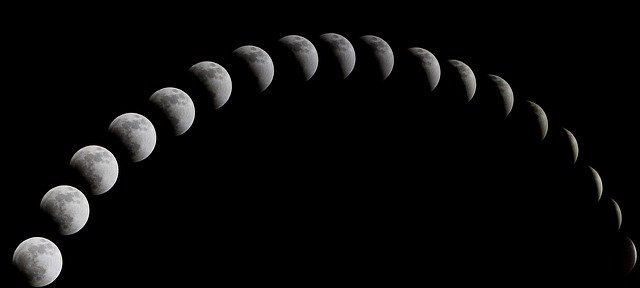
These are the 15 essential facts of lunar eclipse that explains the natural phenomenon and the effects for humans.
1. A lunar eclipse is an event in which the Earth blocks the light from the sun so that it doesn’t reach the Moon. The process of a lunar eclipse occurs when part or all of the Moon’s cross section is covered by the Earth’s shadow.
2. A lunar eclipse causes the Moon to be dark because there is no reflected sunlight. A lunar eclipse occurs when the Sun, Earth and Moon are in a straight line.
3. There are three types of lunar eclipses, namely total, partial and penumbral lunar eclipses.
4. A total lunar eclipse occurs when the entire umbral shadow of the earth falls over the Moon. Thus, the Sun, Earth and Moon are exactly on the same line.
5. A partial lunar eclipse is also commonly referred to as a partial lunar eclipse. This type of lunar eclipse occurs when the Earth does not completely block the moon from the Sun. Part of the Moon’s surface is still in the penumbra.
6. A penumbral lunar eclipse occurs when part of the Moon is in the full penumbra. Thus, the Moon can still be seen with colors that tend to be faint.
7. A lunar eclipse can cause the night to turn darker, because the Moon doesn’t shine as brightly as it normally does. Even so, the Moon can still be seen because the sunlight that is bent towards the Moon by the Earth’s atmosphere has a red spectrum. Therefore, the Moon will appear reddish, brownish, orange, or even dark.
8. During a lunar eclipse, the planet Mars will be visible and appear due to the dimming full light. It will also cause a reddish effect that glows in the sky. One bright reddish dot to the left of the full moon is Mars.
9. A lunar eclipse can actually affect a person’s mood or mood. This happens, because blood pressure and heart rhythm tend to rise, which is associated with rising sea waves that are higher than usual.
10. In 1504, Christopher Columbus used the red color of the Moon to scare the natives of Jamaica. It was intended so the crew of the ship was given food. Columbus said he had an almanac that could predict the occurrence of a lunar eclipse on February 29, 1504.
11. Lunar eclipses usually last for several hours. Partial lunar eclipses usually occur every year, while total lunar eclipses are rare.
12. Total lunar eclipses do not always appear red because these conditions are very dependent on the air quality at the observer’s place. If a lunar eclipse occurs when the air is clean or the sky is free from pollution, the shadow of the Earth that the Moon enters will look blood red.
13. Super blood moon events will only occur when the Moon is full or experiencing a total lunar eclipse. The Moon will appear red. The color of the Moon will be redder depending on the thickness of the particles in the Earth’s atmosphere that the light penetrates, such as air pollution or cloud cover.
14. During a lunar eclipse, there is a higher tide than usual. However, you don’t need to worry too much because the water level is still a safe limit, not up to tens or dozens of meters.
15. NASA has used instruments on its Lunar Reconnaissance Orbiter, a robotic spacecraft circling the Moon to measure surface temperature as it passes through Earth’s shadow. By observing how quickly different rocks cool, scientists can infer their density.
related post