WATER TRANSPORTATION
FEBRUARY 4, 2022
16 Important Facts Of The Egypt Suez Canal
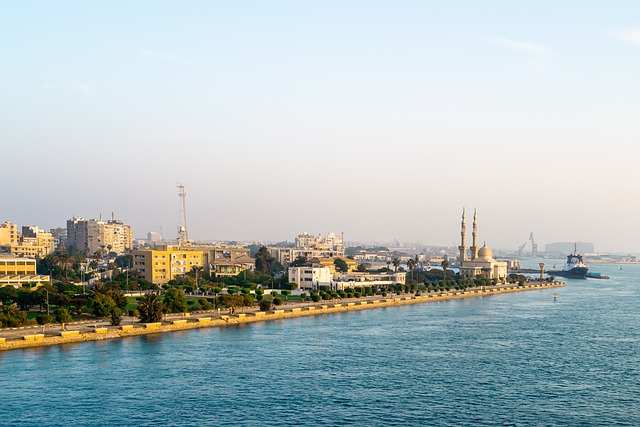
The Egypt Suez Canal as a vital transportation route for ships from Europe to Asia and vice versa.
- A Ship canal or commonly referred to as canal is a canal used to speed up ship sailing.
- The Suez Canal (Qana al-Suways) is a 193-kilometer-long shipping canal located in Egypt and connects the Port of Said in the Mediterranean Sea with Suez in the Red Sea.
- In 1859-1869 there was a collaboration between the Egyptian Khedive Said Pasha and the French Suez Canal Company to build the Suez Canal.
- This canal was built by a French engineer named Ferdinand Vicomte de Lesseps. This artificial canal was built in the Suez region, which connects the continents of Asia and Africa.
- This route or canal is an alternative route from Europe to Asia and vice versa, so if you want to go to the south side of Africa, you don’t have to make a detour.
- The Suez Canal does not take a route across the isthmus but uses several lakes from north to south, namely Manzala Lake, Timsah Lake, Great Bitter Lake, and Little Bitter Lake.
- The Suez Canal for Egypt is very important for Egypt, namely from an economic and geopolitical point of view.
- From a geopolitical point of view, this canal makes Egypt’s position in the international world very important because Egypt has the main shipping route from Europe to Asia and vice versa.
- In the past, the Suez Canal was used as a place of trade between the Nile Delta and the Red Sea.
- The first modern version of the Suez Canal has a length of 160 kilometers with a maximum width of less than 22 meters. The inaugural voyage and opening of this canal occurred on November 17, 1869.
- This route is one of the busiest in the world, accounting for about 12-15 percent of world trade volume.
- The Suez Canal saves between 7-10 days depending on the speed of the ship. While the Panama Canal, which was completed in 1914, shortened the time from the Atlantic to the Pacific by 13,000 km.
- Egypt’s Suez Canal revenue reached the highest revenue of 6 billion US dollars in 2021.
- A ship can cost thousand of dollar per pass. As an illustration, ships with a tonnage of 33,000 tons must pay USD 300 thousand to USD 400 thousand.
- In 1870, when the Suez Canal was fully operational for a year for the first time, ships transiting only happened for 486 times or fewer than two transits per day.
- Egypt once closed the canal for nearly a decade after the Arab-Israeli war in 1967. At that time the waterway was essentially the front line between Israeli and Egyptian military forces.
related post