NAVAL TECHNOLOGY
FEBRUARY 1, 2022
A Long Way Of Submarine Development
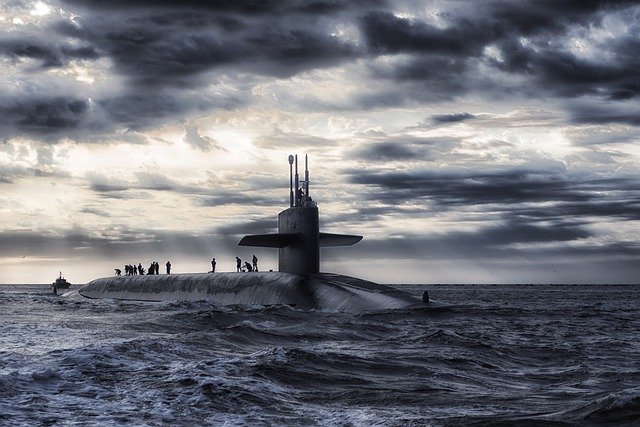
A long way of submarine development from hundreds of years ago until the modern technology inside today’s submarines.
A submarine is a ship that can vary its density so that it can dive, float and float on the surface of the water. To change its density, a submarine adds mass or reduces its mass by adding water or removing water.
The submarine was first discovered in 1620 by Cornelis Jacobszoon Drebbel a Dutch scientist, artist, engineer and inventor. Drebbel was born in Alkmaar, the Netherlands and died in London, England. He is best known for designing the first crewed submarine. When it was first introduced, the submarine had a shape resembling an egg with a wooden base.
The development for submarine reached the important milestone when American inventor Robert Fulton worked for the French government in 1800. He designed the “Nautilus,” a metal craft that is often called the first modern submarine. Later, Wilhelm Bauer built a submarine named the Sea Devil, which was 52 feet high and could carry dozens of crews.
To dive into water, submarine fill its tank with sea water and the Archimedes’ law is applied to submarines. It works depends on the air cavity in the body of the submarine which functions as a place to enter and exit water or air. Furthermore, the submarine will experience a buoyant force that can equalize the weight of the submarine. Thus, the ship rises and floats on the surface.
As the tank begins to fill, the difference between the density of the ship and seawater becomes smaller, so it has negative buoyancy and the ship begins to sink. When the ballast tank is full of seawater, the submarine will be fully submerged and can glide into the sea.
The submarine will float because the lifting force on it is greater than the weight of the submarine, then the submarine will float when the lift is equal to the weight of the submarine, and sink when the lift is less than the weight of the submarine.
To keep the submarine at a level of depth, the submarine maintains a balance between air and water in the balancing tank so that the overall density is equal to the density of the surrounding water (neutral buoyancy).
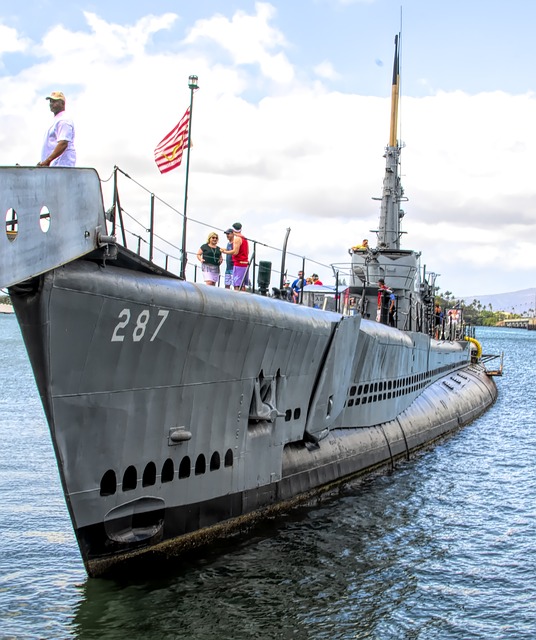
In case of emergency, the situation will be complicated because submarines don’t actually have emergency exits like other vehicles. Submarine doors are more difficult to open freely, because submarine doors are designed so that water cannot enter the gaps in the door. They cannot be opened easily just like that because they are designed with special mechanism so that the water pressure in the sea cannot enter the submarine. Thus, it is impossible for the crew to get out.
There are two main types of submarine today :
- Diesel electric submarine
The diesel electric submarine is the oldest submarine propulsion system still in use today. This propulsion system is so reliable that even nuclear submarine-owning countries still feel the need to have diesel-electric submarines. Of the 5 countries that own nuclear submarines, only the United States does not use this propulsion system. Under certain circumstances, this type of submarine is more lethal than nuclear submarines.
- Nuclear submarine
A nuclear-powered submarine is a submarine that uses a pressurized water reactor or PWR (pressurizer water reactor) as a power source to rotate the main turbine which drives the propellers and an electric motor to charge the battery which generates electricity for various purposes.
In March 1939 Dr. George Pegram of Columbia University, New York, proposed to the US Navy to develop the use of uranium as a power source, including to power submarine turbines. The US Navy was interested and began the research.
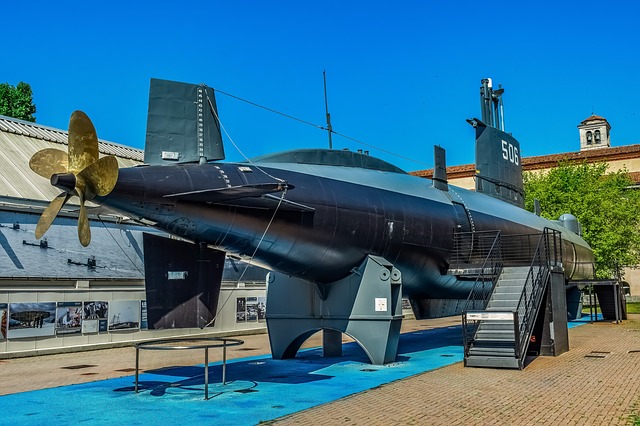
To have an appropriate life support inside a submarine, there are three important issues related in a closed submarine environment : maintaining air quality, clean water supply and room temperature.
Furthermore, in addition to being used for military purposes, submarines are also used for marine and freshwater science and for duty at depths unsuitable for human divers.
related post