WALL CLIMBING
FEBRUARY 8, 2022
Complete History Of Wall Climbing
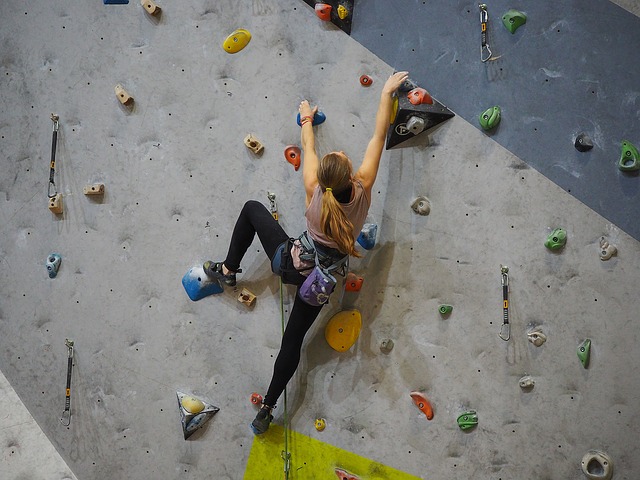
Complete history of wall climbing explains all the tit bids of this sport and its development all around the world.
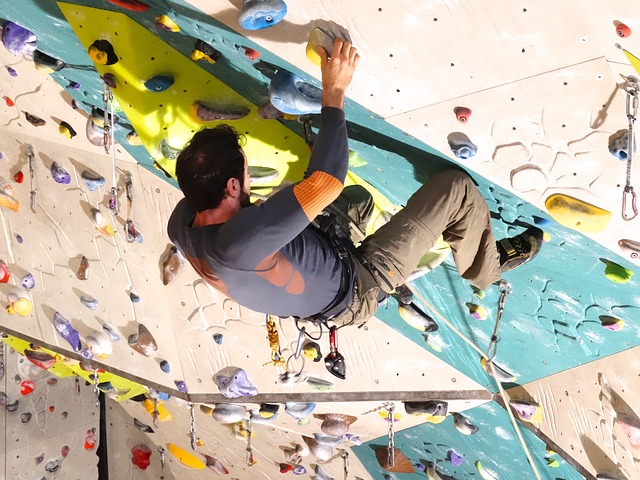
Wall Climbing is one of the many indoor sports and is one part of mountain climbing that cannot be done on foot but must use certain equipment and techniques to get through it.
Contrary to mountain climbing, wall climbing is a rock climbing sport whose medium has been modified from rock climbing into artificial boards or walls that are no less challenging.
A very clear difference lies in the location of these two types of sports. In terms of location, this rock climbing sport is located outdoors, precisely in the wild with a certain height. While the wall climbing is done indoors and outdoors.
In general, rock climbing is carried out in areas with rock contours with a slope angle of more than 45° and has a certain level of difficulty. The types of rock rocks commonly used for climbing in rock climbing are : Andesite stone, Limestone and Coral reef.
Tracing back, wall climbing was introduced in 1938 in Seattle, Washington, United States. Schurman Rock, the rock climbing arena in Seattle that was first used, has now become one of the places to practice the sport.
The person who is recorded to develop this sport in the next three decades, namely in 1964, is Don Robinson. He is a lecturer in Physical Education at the University of Leeds. The wall climbing arena he created was in the form of stone slats tucked into the walls of the campus corridor. The arena is used by his students to practice in Physical Education lectures.
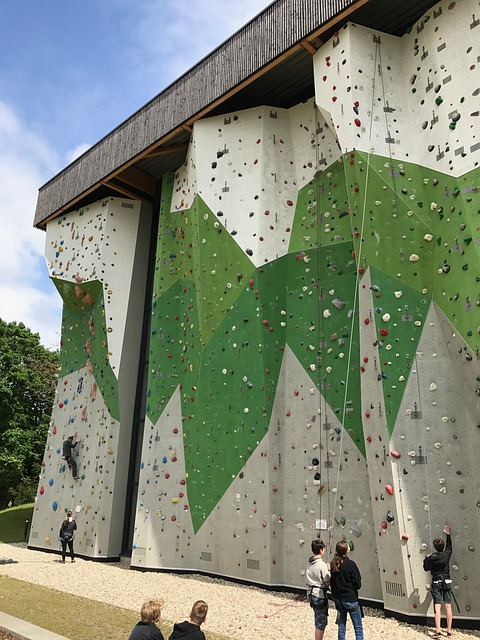
The following are the types of climbing based on the equipment used in rock climbing:
A. Free Climbing
As the name implies, in free climbing the best safety device is yourself. However, personal safety can be improved by having skills that are acquired from good practice and following proper procedures. The equipment only functions as a safety when falling. In practice the climber moves while installing, so even without these tools he or she is still able to move or continue climbing and the climber is secured by a belayer.
B. Artificial (Aid) Climbing
This is the rock climbing with the help of additional equipment, such as pythons, bolts, etc. This equipment must be used because climbing is often faced with terrain that does not or at all provide adequate support or opportunities for movement. The purpose of aid climbing is to increase height.
C. Free Solo Climbing
This one is part of free climbing, but the climber really does it with all the risks because in doing this movement he does not need safety equipment. To do free soloing climbing, a climber must really know all forms of obstacles and decisions for movement on the route traversed. Sometimes he even has to memorize all the movements, be it a pedestal or a grip, so usually people will do free soloing climbing if they have already climbed on the same track.
The risks faced by this type of climber are very fatal, so only people who are capable and truly professional will do it. This climbing technique is not recommended considering the risks involved are the highest compared to other climbing techniques.
In Indonesia, the development of rock climbing began around 1960, at Cliff 48 in Citatah, Bandung. It was initially used as a training ground by Indonesian Army troops.
The year 1976 marked the beginning of modern rock climbing in Indonesia, when Harry Suliztiarto began practicing climbing in Citatah, Bandung and continued by establishing SKYGERS ”Amateur Rock Climbing Group” with his three colleagues, Heri Hermanu, Dedy Hikmat and Agus R. in 1977.
In 1988, the Office of the Minister of Youth and Sports in collaboration with the French Embassy invited four of their climbers to introduce a climbing wall and provide a climbing course. At the end of the event, the Indonesian Mountain and Rock Climbing Federation (FPTGI) was formed with Harry Suliztiarto as the chairman.
related post