NATURE
APR 11, 2022
12 Facts Of Ocean You Probably Didn’t Know
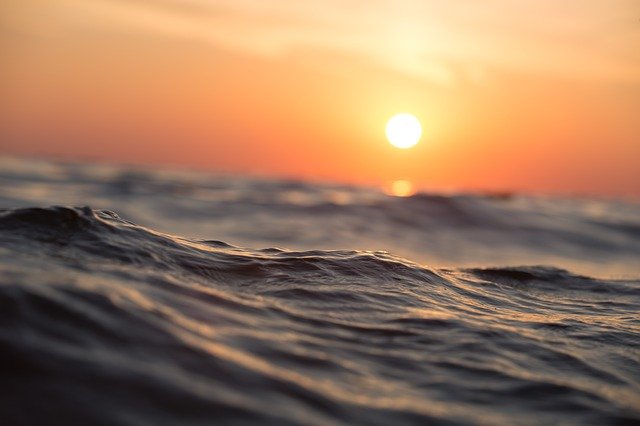
Here are the 12 facts of Ocean you probably didn’t know, as water covers 70 percent of our Earth’s surface.
- The majority of life on Earth is aquatic. Because the Earth’s surface is covered by water, it is not surprising that there are more living things in the oceans than on land. It is remarkable that 94% of the species that live on earth are in the oceans.
- The Pacific Ocean is the largest ocean in the world with 25,000 islands. The Pacific Ocean has more islands than anywhere else on the planet. The ocean covers about a third of the Earth’s surface, with a surface area of 165,250,000 km² (63,800,000 mi2) and a length of about 15,500 km (9,600 mi). The lowest point on Earth’s surface, the Mariana Trench is also in the Pacific Ocean.
- A study conducted by National Geographic in 2011 speculated that 86% of the world’s species have not yet been classified. It is estimated that the planet is inhabited by 8.7 million species, most of which have not been identified.
- Scientists found that there are about 20 million tons of gold in the ocean. Seawater also contains gold although on average only 13/1000000000 grams of gold from one liter of seawater.
- The National Oceanic and Atmospheric Administration (NOAA), United States, estimates that if all the gold contained in the oceans is extracted and distributed to the inhabitants of the Earth, one person will get approximately 4 kg of gold.
- Humans have only explored 5% – 7% of the ocean floor and no more than 1% of the ocean itself. Only about 5% of the ocean floor has been mapped to some extent. With 70% of the earth’s surface covered by oceans, this means that 65% of the earth’s area is unexplored.
- There are underwater rivers and lakes in ocean. As seawater seeps through layers of salt, the salt then dissolves and forms indentations on the seabed. NOAA explains that these soluble salts also create a flow of water in solid areas which makes indentations even more formed. These underwater rivers and lakes are also known as saltwater pools, similar to those on land that also have shorelines and waves.
- National Geographic says the number of artifacts displayed in all the museums in the world is still less when compared to the number of artifacts on the seabed. Much of the history of the world can be found at the bottom of the sea. That does not include the large number of shipwrecks lying on the seabed.
- There are many sounds from the sea that researchers have not been able to explain. “The Bloop” is perhaps the most famous. This mysterious sound was caught in 1997 by hydrophones belonging to the NOAA. This sound is the loudest ever recorded among the noise of an underwater ice quake. Until now no one can confirm where “The Bloop” came from.
- It is estimated that between 70 and 80 percent of the oxygen we breathe is produced by marine plants, almost all of which are marine algae. So, the existence of the ocean and all life in it is very important to produce the oxygen we breathe. Most of it comes from the photosynthesis of microscopic organisms called phytoplankton.
- Mid-Ocean Ridge is the largest and longest seabed mountain range that stretches for up to 40,000 miles. Four times longer than the Himalayas, Andes and Rockies combined
- The deep sea is the lowest layer of the ocean, under the thermocline layer at a depth of more than 1828 m. Very little or no light can enter this area, most organisms depend on organic material falling from the photic zone
related post