ULTIMATE STRUCTURE
MAY 10, 2022
The Rise Of Empire State Building
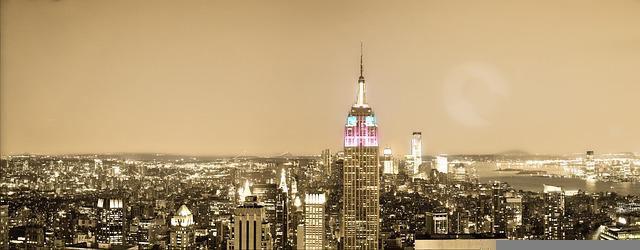
A brief story from the rise of Empire State Building, a cultural American icon and one of the Seven Wonders of the Modern World.
GENERAL OVERVIEW
The Empire State Building is a 102-story skyscraper located in Midtown Manhattan, New York City, at the intersection of Fifth Avenue and West 34th Street.
The building has 102 floors, the height is 381.3 meters. Together with the television tower, added in the 50s, it reaches a total height of 443 meters. Commercial space occupies the first 85 floors of the building (257,211 m²).
The remaining 16 floors are an Art Deco superstructure with an observation deck on the 102nd floor. The Empire State Building is the first building in the world to have more than 100 floors.
BACKGROUND HISTORY
The Empire State Building was designed by William F. Lamb of the architectural firm Shreve, Lamb and Harmon who created the image of the building in two weeks.
Its name is taken from the nickname of New York, namely the Empire State. The Empire State Building was the tallest building in the world for 40 years, from its completion in 1931 until the completion of the North Tower of the World Trade Center in 1972.
After the September 11, 2001 attack, the Empire State Building was again the tallest building in New York (not in the United States or the world). The Empire State Building again became the second tallest building in New York on April 30, 2012 after the new One World Trade Center beat its height.
The building was designated a National Historic Landmark in 1986. In 2007, the Empire State Building was ranked number one on the AIA’s list of favorite architecture in the United States. This building is owned by 2,800 investors who are members of Empire State Building Associates L.L.C.
Alfred E. Smith, former Governor of New York and James Farley General Builders Supply Corporation provided building materials for building construction. Meanwhile, John W. Bowser became the project construction inspector.
CONSTRUCTION WORKS
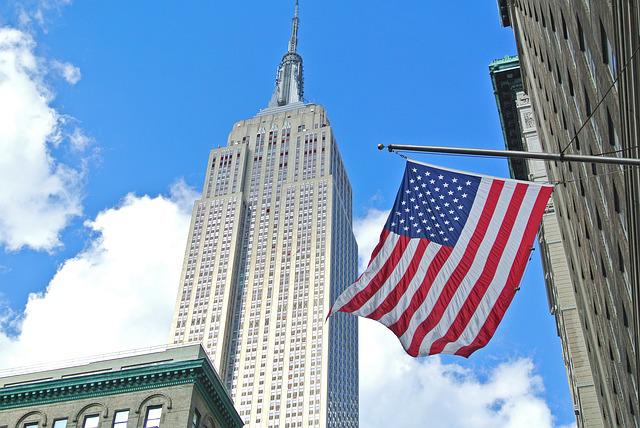
In January 1930, construction began on the Empire State Building in New York. At the preparatory stage, foundation pits are dug, utilities are brought in and the foundation is erected. In March of the same year, construction of the main section began.
All work is based on the conveyor principle. This is especially clearly shown by the fact that the steel frame parts are assembled 8 hours after their manufacture at the factory.
Excavation work on the site began on January 22, 1930, and construction of the tower itself began on March 17, St. Patrick.
The construction site employs 3,400 workers, mostly immigrants from Europe, as well as several hundred Mohawk steel workers, many of whom are from the Kahnawake Reservation near Montreal. There were five worker deaths during construction, according to official figures.
The construction of the building was part of the tall building competition that was taking place in New York at the time. Two other projects in the race, 40 Wall Street and the Chrysler Building, were underway when the Empire State Building was just starting to build.
The official opening took place on May 1, 1931, when US President Herbert Hoover lit the building’s lights at the push of a button in Washington. The following year, the first use of overhead lighting was to celebrate Roosevelt’s victory over Hoover in the November 1932 presidential election.
At the building’s inauguration on May 1, 1931, Governor Smith’s children cut ribbons. When the Empire State Building officially opened on May 1, 1931, the United States was experiencing an era of economic depression. Therefore only small number of floors were occupied and the building was given the name “Empty State Building”.
The Empire State Building is currently undergoing a $550 million renovation. $120 million of which is budgeted to transform the building into a more energy efficient and environmentally friendly building.
POP CULTURE
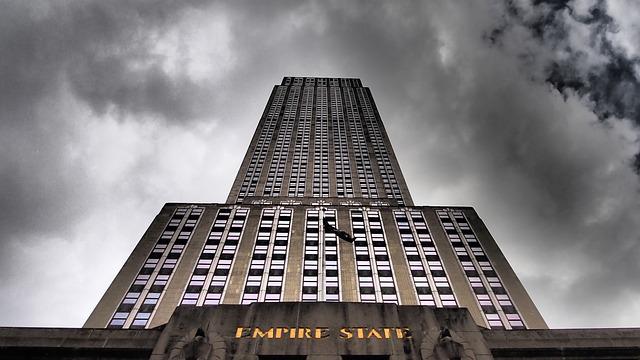
The Empire State Building has generally become a cultural icon of the United States. The building is designed in the Art Deco style and has been named one of the Seven Wonders of the Modern World by the American Society of Civil Engineers.
Of the more than 90 films featuring the Empire State Building, none is more famous than the 1933 “King Kong” described climbing to the very top of the Empire State Building. On the film’s 50th anniversary, in April 1983, a balloon company president attempted to reshape the film’s conditions by placing an inflatable King Kong in the Empire State. Unfortunately, this idea failed as the 85-foot Kong balloon felt a tear as it was inflated.
related post