MILITARY
FEBRUARY 19, 2021
A powerful Hornet you don’t want to mess around with
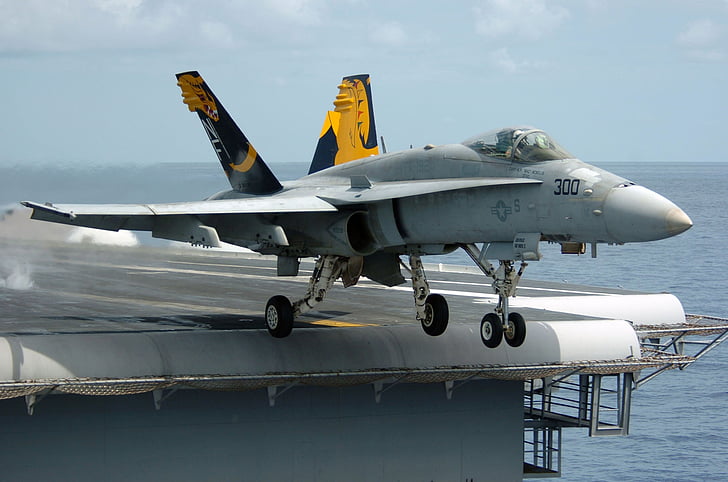
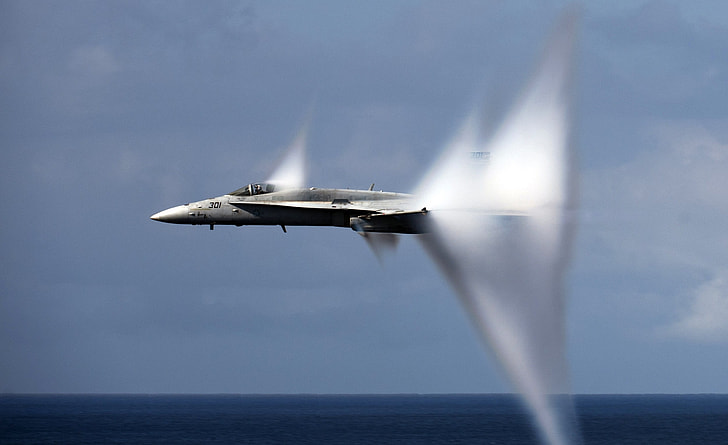
F/A-18 Hornet is the all-weather fighter and attack aircraft and was designed for strike applications such as interdiction and Close Air Support (CAS). As a fighter the Hornet is used as a fighter escort and for fleet air defense.
The F/A-18 Hornet was designed to replace the ground attack role capability of the A-7 Corsair and also the air superiority and ground attack role of the aging F-4 Phantom. The requirement also mentioned that it had to be a low cost complement to the F-14 Tomcat and able to operate from airstrips for the US Marine Corps.
The requirement to meet for a multi-role combat aircraft as a fighter and ground attack jet, led the Hornet to be the only aircraft in services with US forces to have dual designation, F (Fighter) and A (Attack).
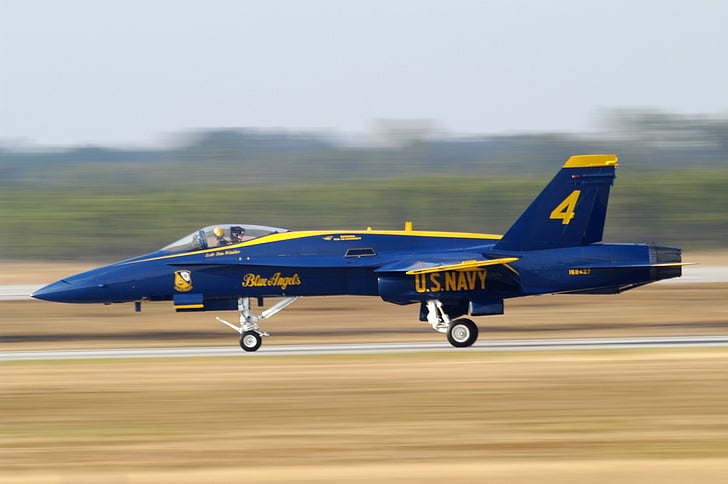
In United States the operators of F/A-18 A-D jet are US Navy, Marine Corps fighter attack squadrons and Marine Corps Reserve squadrons and the US Navy Flight Demonstration Team (Blue Angels) and other non-military US institution, NASA. The F/A-18 Hornet completed its first flight in 1978 and in 1982 entered operational service with the Marine Corps and later on the US Navy in 1983.
The F/A-18 Hornet remains the backbone of Marine Corps tactical aviation and supports operational deployment around the world. It will serve as the Marine Corps’ primary fighter before F-35 Joint Strike Fighter coming in to replace them in 2030 in its planned sundown.
Non US operators of this aircraft are air forces from other nations, they are : Australia, Canada, Finland, Kuwait, Malaysia, Spain and Switzerland. Canada was the first export customer and the largest Hornet operator among those countries. The Canadian F/A-18 Hornets are designated CF-188.
The Hornet demonstrated its capabilities and versatility early in its lifecycle during Operation Desert Storm.
Before the F-18, no attack aircraft could match a true dog fighter in the air. The birth of F/A-18 Hornet was an innovative advancement, being able to fight both ground and air targets on the same mission, one Hornet even engaging a MiG-21 “Fishbed” aircraft without dumping its Air-to-Ground (AG) ordnance, and succeeding. Before that, no fighter aircraft possessed capabilities that enabled it to carry out the ground attack mission role without an additional pilot. Even multi-role aircraft, which could perform either duty, often couldn’t carry enough weapons to destroy both air and ground targets in one single combat mission.
The Hornet first combat mission was during the 1986 when United States bombed Libya, then part of 1991 Gulf War, Operation Desert Storm and 2003 Iraq War. This jet showing its capabilities during those wars, shot down enemy fighters and bomb various ground targets within the same mission. Its survive ability showed when some Hornets took direct hits from Surface-to-Air-Missiles (SAM), managed to return to base, repaired quickly and fly again the very next day.
In the Operation Desert Storm, F/A-18 Hornet had regular sorties, flying from carriers to rendezvous points with KC-135 and KC-10 tankers to refuel and then heading on to their targets almost everyday. Only one F-18 lost to Iraqi MIG-25 Foxbat, and it was the only American aircraft lost in Operation Desert Storm. But it was able to quite capably defended itself and had destroyed many targets.
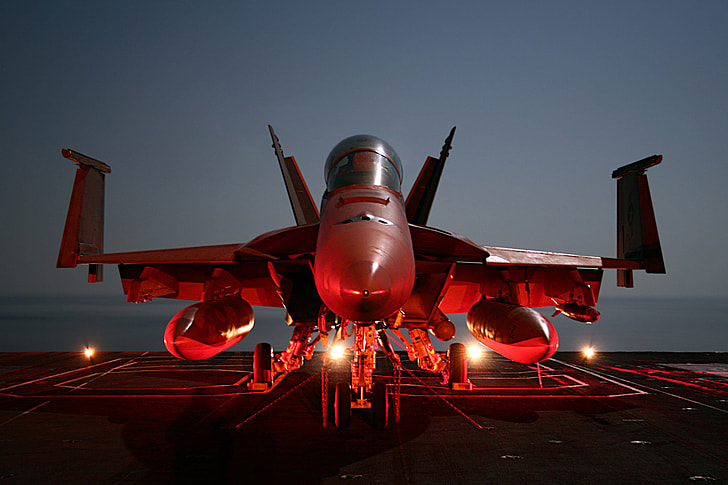
The F/A-18 E/F Super Hornet is the variant, next generation of the Hornet with larger and more powerful engines, square intakes, new and more weapons choices to carry for combat missions and a 25% increase in size over the original design.
There is also E/A-18 Growler variant which is designated for electronic war and ground attack. Having the capability to penetrate enemy radar/electronic defense and destroy their main radars to put enemy lose their air defensive ability. Plus counter measure and jamming various signals to cripple any kind of electronic communication. Growler gradually replacing Grumman E/A-6 Prowlers.
In the pop culture world this jet also appears in some Hollywood box office movies. In Independence Day (1996) we can watch Will Smith fly F-18 against fierce aliens. Godzilla (1998) is another movie example of this jet fighting against the king of monster, Godzilla. Behind Enemy Lines (2001) starring Gene Hackman and Owen Wilson also featuring this plane at the beginning of the film. And the most recent is Top Gun : Maverick (Top Gun 2) (2020) where Tom Cruise flying this plane and its variant, Super Hornet.
TECHNICAL SPECIFICATION
OPERATIONAL STATISTIC
Related post