WIRELESS TECHNOLOGY
JUNE 4, 2023
Discovery And The Future Of Bluetooth
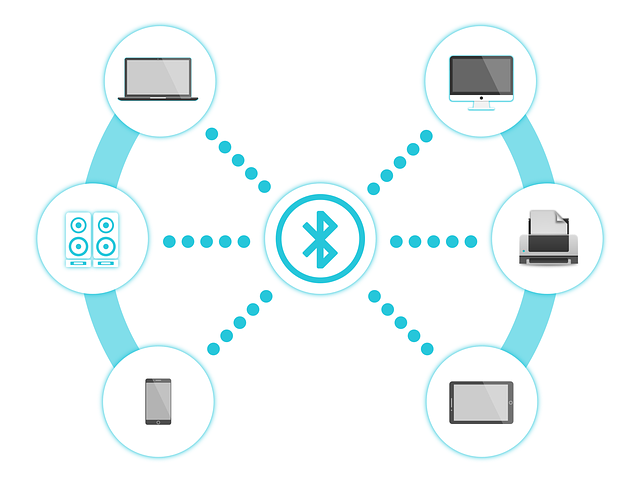
Bluetooth has changed the way we use the technology in hands-free devices such as headsets used with cell phones.
Bluetooth is a short-range wireless technology standard used for exchanging data between non-mobile and short-range mobile devices using UHF radio waves in the Industrial, Scientific and Medical (ISM) band from 2.402 GHz to 2.48 GHz, and forms Personal Area Networks (PAN).
Bluetooth has changed the way we use our cell phones. The most common use of Bluetooth technology is in hands-free devices such as headsets used with cell phones.
Some of the newer products from Bluetooth have proved to be unique in that there are very few of them like them. Cell phones with bluetooth technology are completely wireless and compatible with your computer, PDA, Mp3 player and now the navigation system in your car.

ORIGIN
Bluetooth is the Anglican version of the Scandinavian Blåtand/Blåtann (or blátǫnn in Old Norse). The name was the nickname of King Harald Bluetooth, who united the disparate Danish tribes into a single kingdom;
The squiggle shape in the trademark bright blue is derived from the runes in the Roman alphabet that represent the “H” and “B”. In other words, those are the initials for Harald Bluetooth. In technical terms, the Bluetooth logo is a “bind-rune”. This means that it is an image consisting of two runes joined together.
HISTORY OF DISCOVERY
Working for Ericsson’s mobile division in the mid-1990s, Dutch engineer Jaap Haartsen devised a revolutionary way of connecting electronic gadgets to each other in close proximity without the use of wires using a variety of low-power radio frequencies.
Jaap Haartsen has been active in the wireless communications field for over 25 years. In 1994, he laid the foundation for the system that became known as Bluetooth Wireless Technology, which allowed endless connections between devices.
In 1996, three information technology industry leaders, Intel, Ericsson and Nokia, met to plan a standardization of short-range radio technology to support connectivity and collaboration between various products and industries.
The name “Bluetooth” was suggested in 1997 by Intel’s Jim Kardach, one of the co-founders of the Bluetooth SIG. The name was inspired by a conversation with Sven Mattisson who related Scandinavian history through stories from Frans G. Bengtsson’s The Long Ships, a historical novel about the 10th century Viking and Danish king Harald Bluetooth. Kardach chose this name to imply that Bluetooth also unifies communication protocols.
STANDARDIZATION AND APPLICATION
Nobody “owns” Bluetooth, but its use and progress is managed by an entity. To ensure Bluetooth becomes a universal communications protocol, in 1998 a group of companies came together to form the Bluetooth Special Interest Group (SIG), a non-profit group.
In May 1998, the Bluetooth SIG was launched with IBM and Ericsson as founding signatories and a total of five members: Ericsson, Intel, Nokia, Toshiba and IBM.
The first consumer Bluetooth device was launched in 1999. It was a hands-free mobile headset that was awarded at COMDEX. The first Bluetooth cell phone was the Ericsson T36 with a revised T39 model which went on sale to consumers in 2001.
WAYS OF WORKING
Bluetooth (which is a type of RF) is an open wireless technology standard for transmitting data over short distances. This communication uses radio waves at certain frequencies to transmit data from device to device.
In Bluetooth, pairing allows two Bluetooth devices to communicate with each other. In order for devices to find and identify each other so they can communicate, one or both of them must be discoverable, which means that the devices are broadcasting a Bluetooth signal that the other devices can detect and connect to.
Devices connected in a Bluetooth network communicate with each other using ultra-high frequency (UHF) radio waves. These waves are electromagnetic waves with a frequency of about 2.4 gigahertz (2.4 billion waves per second).
LIMITATIONS
For now, Wi-Fi has a much faster maximum speed than Bluetooth: at least 54 Mbps for Wi-Fi, vs just 3 Mbps for Bluetooth. As a result, Bluetooth is usually only used to transfer small chunks of data.
Additionally Bluetooth hacking can occur when a hacker uses their own Bluetooth connection to gain access to your phone. However, this can only happen if your phone is within the Bluetooth range of the hacker. Usually about 30 feet.
FUTURE
The study finds steady growth of 8.5% by 2024. Similarly, the authority Bluetooth Special Interest Group (SIG) predicts 400 million Bluetooth integrated location service devices will be active per year by 2022.
Currently, the Bluetooth version that is on the market is 4.2 technology. According to CSR, the speed increase is dramatically up to 2.6x faster meaning super fast downloads compared to older Bluetooth versions.
Meanwhile Bluetooth 5.0 which is being developed will be available soon. Compared to Bluetooth 4.2, Bluetooth 5.0 can transmit eight times more data, at twice the speed, with four times the range
related post