FOR INDONESIAN FREEDOM
NOVEMBER 19, 2021
Maguwo 1947 : Above And Beyond The Call Of Duty – part 1
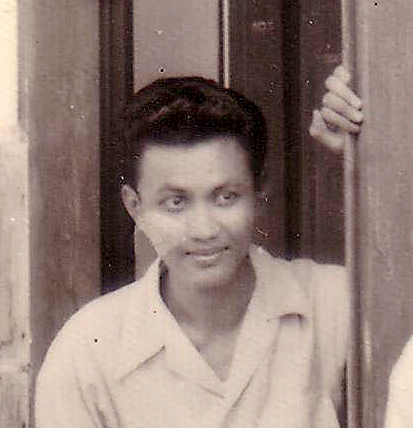
SOETARDJO SIGIT
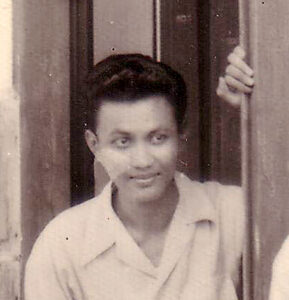
The historical bombing of Salatiga as was told by Soetardjo Sigit himself, an Indonesian Air Force pilot.
When I was still in the Air Force, I had an experience that I wouldn’t forget as long as I live.
When Japan surrendered at the end of World War II, the Dutch tried to regain their colonial rule over the archipelago formerly called the “Netherland East Indies” that was formally changed into “Indonesia” during the Japanese occupation.
But the Indonesians were determined to defend their newly formed and sovereign state : the “Republic of Indonesia” that they have proclaimed on August 17, 1945. Therefore they fight the well equipped Dutch troops with old and inferior weapons and equipment captured from the Japanese Army and left-overs from the Dutch colonial forces when they surrendered to the Japanese.
That unforgettable experience was when I had to make a surprise attack on the enemy in the city of Salatiga, in an old flimsy aircraft, a Japanese bi-plane trainer.
The aircraft was made of wood and aircraft-linen, a fabric made exclusively for aircraft covering. This aircraft is called “Churen” that means a “basic trainer” in Japanese, but we used it as a primary trainer instead.
The date was July 29, 1947. The AURI as the Indonesian Air Force is called, had only four planes left in Jogjakarta, because since the 21st of July the Dutch Air Force repeatedly attacked every airbase we had, causing heavy losses on our side.
On July 28, The Air Force High Command, who decided to launch a counter attack called a volunteers. Three fellow pilots and I volunteered for that mission. It was decided that on July 29, before dawn, two aircraft flown by Moeljono and Bambang Saptoadji would attack the Dutch in Semarang, while another two flown by Soeharnoko and myself would attack the enemy in Salatiga.
I was to lead the attack on Salatiga. At one o’clock that morning, the mission of Bambang Saptoadji was cancelled because his aircraft, a Hayabusha fighter which had some trouble, couldn’t be readied for his flight. The mechanism that has to synchronize the machine-guns that would shoot through the plane’s rotating propellers was out of order.
So only Moeljono was left to attack Semarang. The mechanics had readied the three aircraft remaining : one dive bomber which would be used to attack Semarang and two bi-plane trainer, for Soeharnoko and myself to attack Salatiga with.
The armorers had put machine-guns in the back seats of both Moeljono’s and Soeharnoko’s planes to defend themselves against enemy fighters.
But my plane couldn’t take a machine gun because there wasn’t any mounting for it in the back seat. So my air gunner got an extra-number of incendiary bombs to throw out.
They’ve also put bomb-racks on the three aircrafts, for the big fragmentation bombs under the wings.
Because there wasn’t any taxi-way of runway lights, we were guided to our take off positions at the end of the runway by parked automobiles which had their headlights on.
To assist us in our take off, a big anti-aircraft search light was placed at the very end of the runway, behind our take off positions, to provide us with enough light on our take off run. This arrangement later provided to be a mistake that nearly cost us our lives.
At our “ready to go” signal, the search light was switched on. Instantly a very bright blue-white beam was cast along the surface of the runway, engulfing our three aircrafts with its brilliancy.
So intensely bright was the light that we were instantly blinded and couldn’t see anything at all. After several moments, when our eyes had adjusted themselves, we gradually could see the instruments in our cockpits.
Moeljono took off first then came my turn, followed by Soeharnoko as the last to go. I had no trouble with my take off run. The runway surface was splendidly illuminated for the whole length.
But my troubles started as soon as I was airborne and left the beam of light along the runway surface. The instant I left the very intense and brilliant light and climb into the darkness, I became “blind” again only with the difference that now I was not on solid ground any more but groping my way through the darkness in a bucking aircraft on full take off power without any previous experience in night flying !.
Without these additional problems, every take off is very critical for any aircraft because it has to go through a critical period right after being airborne , when speed is still so near the stalling, which is a speed at which the aircraft wouldn’t fly and just drop like a stone.
And to control this speed, I needed my eyes to watch the instrument closely, especially the speed indicator. But I was temporarily blind at those moments.
The only thing I could do was rely on my good luck while trying to fly the aircraft as best as possible by keeping the flying stick in such a position as to get a slight rate of climb, to avoid hitting the trees and the other obstacles at the edge of the airbase.
My main problem was not to climb too steep to avoid reaching the stalling-speed, while on the other hand I mustn’t let the aircraft drop and fly into the ground.
After what appeared to be a lifetime, I gradually could see my cockpit instruments again and my problem seemed to be over.
related post