INDONESIAN HERITAGE
MAR 3, 2022
Meet Angklung, The Indonesian Musical Instrument
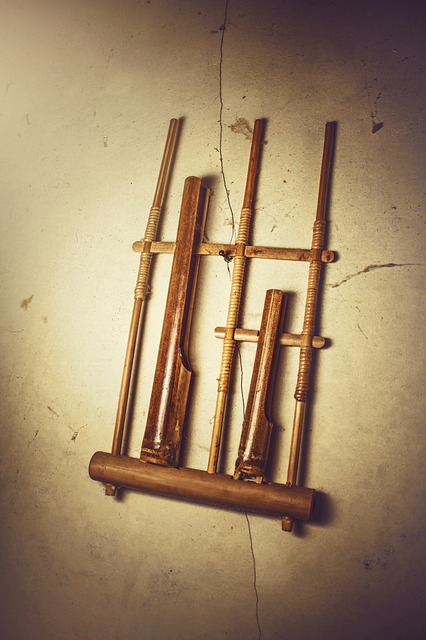
Let’s meet angklung, the Indonesian musical instrument from West java region and is now a UNESCO cultural heritage.
Angklung is a multi tonal (double-pitched) musical instrument that is made of bamboo, sounded by shaking (the sound is caused by the impact of the body of the bamboo pipe) so as to produce a vibrating sound in the order of 2, 3, to 4 tones in each size, both large and small.
The types of bamboo commonly used as musical instruments are black bamboo (awi wulung) and ater bamboo (awi temen), which are white-yellow in color when dried. Each tone is produced from the sound of the bamboo tube in the form of blades of each bamboo segment from small to large.
Angklung is an idiophone instrument. An idiophone is a musical instrument that can produce sound from its own instrument. Examples of idiophone musical instruments including calung, angklung and ceng-ceng ricik (a set of Balinese gamelan).
During the Sunda Kingdom era (12th – 16th century), angklung was played as a form of worship to Nyai Sri Pohaci as a symbol of Dewi Sri (the goddess of rice / fertility goddess) as was told in the Song of Sunda.
A modern variant of angklung is the angklung padaeng. Previously, traditional angklung used slendro, pelog or madenda scales. In 1938, Daeng Soetigna, a teacher and artist from West Java, redesigned traditional angklung so that angklung could play diatonic notes. Angklung was previously a pentatonic musical instrument.
The pentatonic scale only consists of five notes, so the traditional angklung was only able to play Sundanese and Javanese music. After being changed to diatonic, the angklung has seven notes that are one and a half notes apart or commonly known as do-re-mi-fa-so-la-si-do.
Daeng Soetigna is now known as the father of West Java Angklung due to his successful invention in creating a diatonic angklung. He deserves to be made as a national figure because he has created a musical instrument that contains a high philosophy of life.
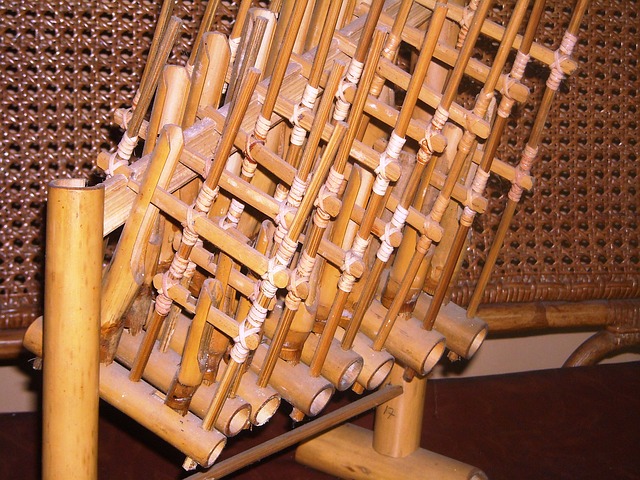
The word “angklung” itself comes from 2 words from the Sundanese language, namely “angkleung-angkleung” which means floating and “klung” which is the sound produced by the musical instrument.
Etymologically angklung comes from the word “number” which means tone and “lung” which means breaking. So, angklung refers to a broken or incomplete tone.
According to the Disdik Purwakarta website, there are three basic techniques of shaking the angklung, namely:
• Kurulung (vibrating), is the most commonly used technique, in which one hand holds the angklung frame, and the other hand shakes the angklung for the desired note, until the bamboo tubes are intertwined and produce sound.
• Cetok (jerk), is a technique in which the base tube is pulled quickly by the finger into the palm of the right hand, so that the angklung will sound only once (staccato).
• Tengkep, is a technique similar to kurulung, but one of the tubes is held still, not vibrating
Some traditional musical instruments have also been listed in UNESCO as Indonesian cultural heritage such as angklung which is a traditional musical instrument from West Java. Angklung is registered as a Masterpiece of the Oral and Intangible Cultural Heritage of Humanity from UNESCO since November 2010.
According to UNESCO, angklung meets the criteria as an intangible world cultural heritage, among others, because it is an important part of the cultural identity of the people in West Java and Banten. This musical art contains the basic values of cooperation, mutual respect and social harmony.
Today in Indonesia angklung is preserved by many local artists, one of them is Udjo Ngalagena. He built Saung Angklung Udjo in Bandung for that intention. The struggle to introduce bamboo music to the world was continued by Udjo Ngalagena’s son, Sam Udjo.
The second child of 10 siblings became one of the Sundanese artists and culturalists, especially the angklung instrument. He continues to preserve this national heritage while also encouraging young people to learn the instrument.
related post