BIG CITIES
FEBRUARY 28, 2022
The Essential History Of Berlin City
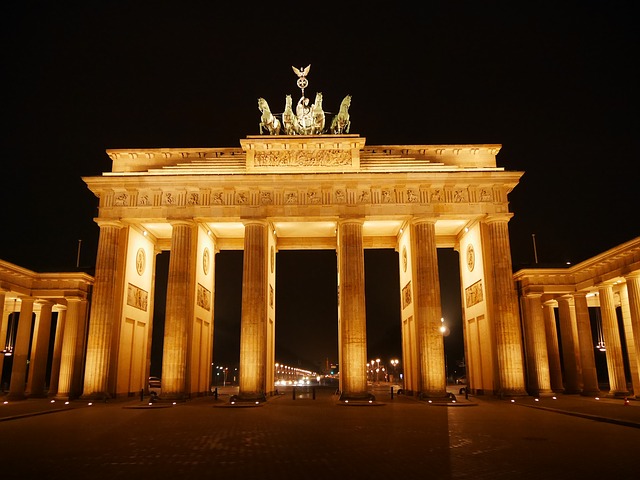
This is the essential history of Berlin City that you have to know before you make a trip to the city someday.
Since 1994, the city of Berlin has been the capital of the Federal Republic of Germany. Previously the eastern part of the city was the capital of the German Democratic Republic or East German from 1949 – 1990 and the capital of the united Germany from 1871 – 1945.
During the reigns of Frederick William and Frederick II, Berlin gained a place of honor in the international world during the 17th and 18th centuries.
First documented in the 13th century, Berlin was the capital of the Kingdom of Prussia (1701–1918), the German Empire (1871–1918), the Weimar Republic (1919–33) and Nazi Germany (1933–45). Berlin in the 1920s was the third largest municipality in the world.
The city is also used as a traffic center for economic, cultural, educational, political and scientific activities in Germany. The city’s economy is based on service sector and high-tech industries, plus several creative industry sectors, media and convention arenas.
In 1936, Berlin hosted the summer Olympic Games, amidst the ongoing conflict in Europe. Many hidden agendas were carried out to promote the superiority of the German nation during the sport event by the Nazi Hitler.
After Germany’s defeat in World War II, the country was divided into four occupied territories by the war-winning nations : United States, England, France and The Soviet Union. The city of Berlin, with an area of 883 square kilometers, which was on Soviet territory, was also divided.
The country was then split into two countries : West Germany and East Germany. The division of German territory was regulated in the Potsdam agreement on August 2, 1945.
The Berlin city was also split into East Berlin-the capital of East Germany and West Berlin of the federal state of the Federal Republic of Germany.
In 1949, the three western regions of Germany became the Federal Republic of Germany, with Bonn as its capital. The Soviet-owned territory in the east became the German Democratic Republic, with the eastern part of Berlin as its capital.
However, the development of these two areas was quite different. With the support of capitalist liberal countries, West Germany experienced high economic growth. The opposite happened in East Germany under the influence of the communist Soviet Union.
The difference in quality of life has triggered a massive wave of immigration from East Germany to West Germany, especially since 1950. Although a few immigrants were stopped, hundreds of thousands of others managed to cross the border. Between 1949 and 1961 at least more than 2 million East Germans fled through Berlin.
On August 13, 1961, East Germany began building the Berlin Wall between East and West Berlin and several other barriers around West Berlin. This wall was originally just a barbed wire stretched for 100 miles on the border of East Berlin and West Berlin.
However, the first layer of wall was then built with permanent concrete and barbed wire on top. Over time, the Berlin Wall was further strengthened by the construction of a second layer of concrete walls 155 km long and 4 meters high.
In 1989, with the end of the Cold War and pressure from the East German population, the Berlin Wall finally fell and most of the wall was demolished. There is a small part that remains, called the East Side Gallery in Friedrichshain near Oberbaumbrücke. The German reunification occurred after the fall of the Berlin Wall.
On October 3, 1990, the two parts of Germany were unified as the Federal Republic of Germany and Berlin was again given status as the nation’s capital. Every October 3rd the history of reunification between West and East Germany in 1990 is commemorated annually .
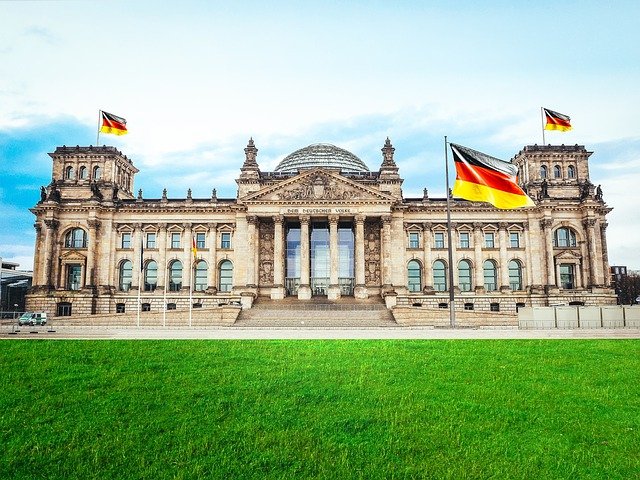
In June 1991, the German Parliament, Bundestag, Hauptstadtbeschluss decided to move the German capital back to Berlin (from Bonn) which was finally completed in 1999.
According to Wikipedia, in 2007 the city has a population of approximately 3.3 million people, making it the largest city in Germany and the second-largest city in the European Union after London. Located in northeastern Germany, the city is the centerpiece of the Berlin-Brandenburg Metropolitan Area.
related post