DATA STORAGE
MAY 12, 2023
The Evolution Of Data Storage Media: From Cave Paintings To Cloud Storage
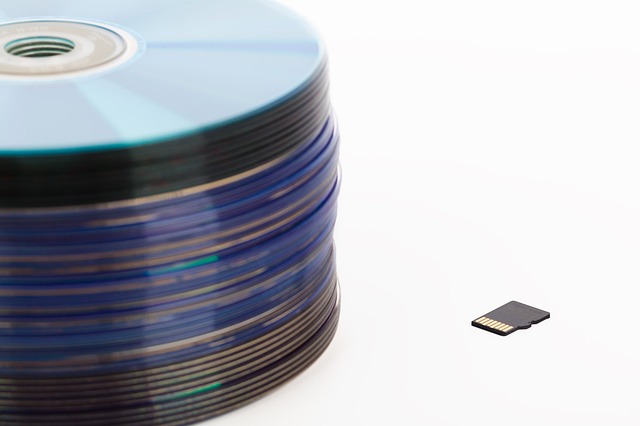
Learn the evolution of data storage media that already exist long before, from cave paintings to cloud storage.
EARLY HISTORY
Data storage is the recording (storage) of information (data) in a storage medium. Handwriting, phonographic records, magnetic tapes and optical discs are examples of storage media. Recently, some researchers have even proposed DNA as a natural data storage mechanism.
In ancient times, information storage media were taken from natural objects that are encountered everyday, such as carved or etched bones and shells and painted or etched stones, all of which can be used for information storage.
Among the earliest known forms of data storage are images carved into rock or painted on cave walls.
COMPUTER AGE
As computers were created, information storage technologies became more advanced, data sizes increased so that the demand for increased storage capacity continued to occur.
Data storage devices have evolved drastically from large chests that only hold a few kilobytes of data to microchips that can hold several gigabytes of data.
There are three main categories of storage devices: optical, magnetic and semiconductor. The earliest were magnetic devices. Data storage with computers begins with magnetic storage in the form of cassette tapes (such as audio cassettes or video cassettes). After that it developed into hard disk drives and then into floppy disks.
In 1951, magnetic core memory was first used in the MIT Whirlwind computer. Core memory works by storing one bit of data on a small magnetic ring or core.
The more magnetic cores we put into core memory, the more data we can store in it. Core memory was standard in computing from 1955 to 1975.

STORAGE TECHNOLOGY DEVELOPMENT
IBM developed and manufactured disk storage device technology between 1956 and 2003 and then sold its “hard disk” business to Hitachi in 2003.
Semiconductor technology is the fastest growing type of data storage. HDD and Solid State storage capacities have been doubling every 12 to 18 months.
Desktop drives currently come in storage capacities up to 4 TB. This is enough to hold 1 million photos or 562 hours of HD video. Some are even producing with a capacity of 20 TB in 2022.
HARD DISK DRIVE
Hard disk is the oldest storage device. The first hard disk drive was the IBM Model 350 Disk File that was included with the IBM 305 RAMAC computer in 1956. It had 50 24-inch disks with a total storage capacity of 5 million characters (just under 5 MB).
The way HDD works is as follows: a hard drive contains rotating platters with a thin magnetic coating. A “head” moves across the plate, writing 0’s and 1’s as a small magnetic North or South area on the plate.
To read the data again, the hard drive head returns to the same point, prepares for the rotating North and South points and then processes the data in the form of 0’s and 1’s that have been stored.
DATA STORAGE MOBILITY
Some storage devices are also portable, meaning they can be used to transfer information from one computer to another.
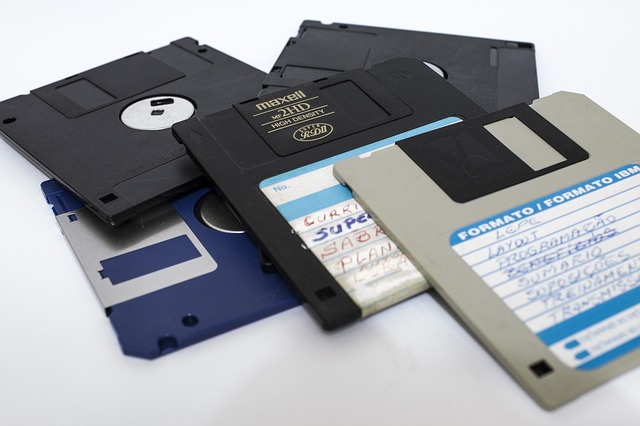
IBM shifted its focus to 8-inch disks from 1969 through the mid-1980s. A floppy disk is a portable storage device that can be easily removed and installed easily.
The first removable disk was introduced by IBM. They introduced the first hard drive with a removable disk IBM 1311 in 1963. This device used interchangeable disk packages, each consisting of six disks of 14 inches in diameter. Each disk pack stores about 2MB of data.
STORAGE MEDIA TYPE
Currently there are several media to store our digital data:
• SSD and flash storage
• Hybrid storage
• Magnetic Storage
• Optical storage
• Cloud storage
• Hybrid cloud storage
• Backup software and support tools
Today’s favorite storage media is SSD. Although at the beginning there were problems with the interface, today SSD is the most reliable storage device.
DVDs are also reliable but it depends on how we care for and store them and there is also a decrease in the quality of storage from time to time.
Whereas external USB drives fail most often due to SATA to USB HD adapters.
Online data storage refers to the practice of electronic data storage with third party services accessed via the Internet. It is an alternative to traditional local storage such as hard drives and portable storage such as optical media or flash drives.
related post