HISTORIC STRUCTURE
MAY 8, 2022
The Great Machu Picchu Story
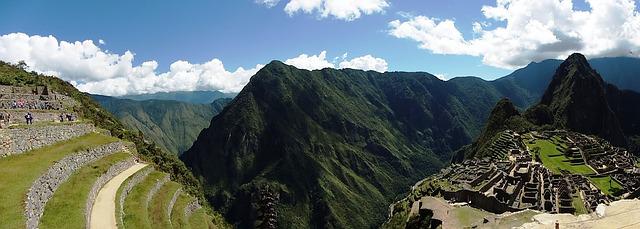
Not just for the great history, Machu Picchu site is a world heritage and one of the Seven Wonders of the World.
OVERVIEW
On July 24, 1911, American archaeologist Hiram Bingham from Yale University discovered the historic ruins of Machu Picchu in Peru. The monument belong to the Incas, located near the city of Cusco. It was believed as a secret Incas fort that was used for a 16th century revolt against the Spanish government.
Cusco was once the capital of the Inca Empire which controlled most of South America. Although its heyday ended in 1533, the Inca Empire left behind the culture that shaped Peru.
At that time, Bingham and his team of explorers were actually looking for the whereabouts of Vilcabamba, the last Inca stronghold that fell to the Spanish. But on his way, the locals pointed out the ruins located at the top of the mountain that later discovered to be the Machu Picchu.
THE LOST CITY
Machu Picchu is nicknamed the ‘lost city of the Incas’ or the ‘lost city of the Incas’ because its whereabouts were unknown to the outside world for centuries. In addition, the Spanish conquistadors also found it difficult to penetrate the area because there was no access road.
The Peruvian or Quechua language means Machu Picchu as Old Peak. This is closely related to the location of Machu Picchu which occupies a mountainous area. The height of this building measured from sea level is 2,340 meters above sea level. The temperature in Machu Picchu is not as cold as in Cusco, because it is located in the Urubamba Valley, a place 70 km northwest of Cusco, which is in lower altitude.
Before the discovery this site was forgotten by the international community, but not by the local community. Today, Machu Picchu has become an attractive tourist attraction for local and foreign tourists.
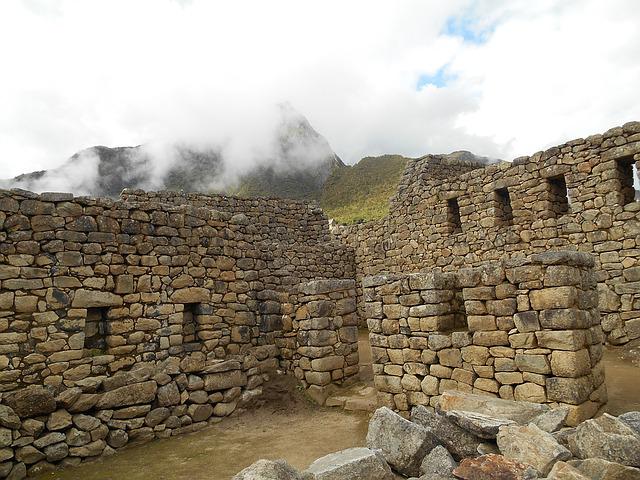
INCA CIVILIZATION
The Inca civilization was an early civilization in South America centered in Peru. This civilization is also known as Tiwantinsuyu and developed throughout the western hemisphere of South America. The Inca civilization began to exist in Cusco since the early 5th century AD.
The site was built by the Incan Emperor Pachacuti in 1450 AD. Machu Picchu’s function at that time was as a fortress, imperial resting place, and a place for religious ceremonies.
Under his rule, the territory of the Inca Empire stretched from Northern Ecuador to Chile with a population of 12 million people. Not only that, the Pachacuti Inca Yupanqui succeeded in building the Inca civilization, one of the greatest civilizations in South America.
The way the Incas passed on their culture was by storing it in quipu after the information had spread to the community, quipu was a place for storing wires with knots with codes made by the Incas.
BUILDING STRUCTURE
The Machu Picchu site consists of two complexes, namely a central area and a series of buildings on the west side of the terrace. Areas of the site are connected by more than 3,000 steps.
Archaeologists have identified several sectors with different functions, including cities, farms, housing, royal neighborhoods, cemeteries, and special religious areas.
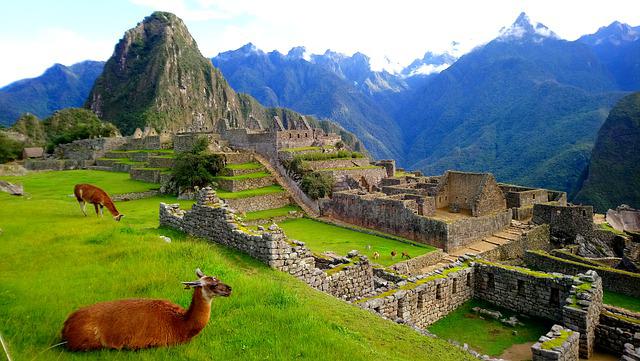
Machu Picchu’s most famous major constructions are the Intihuatana, the Temple of the Sun, and the Room of the Three Windows.
WORLD RECOGNITION
The cultural heritage site was recognized by UNESCO as a world heritage in 1983. It’s just that its determination as the 7 wonders of the world only succeeded a few decades after that.
The great support sent through the short message service (SMS) and the internet resulted in a decision by the Swiss Foundation that Machu Picchu deserved to occupy a special position. Precisely on July 7, 2007 there were about 100 million people on Earth chose Machu Picchu as a tourist spot worthy of being categorized as “The 7 Wonders of the World.”
RECENT STUDY & AGREEMENT
According to a new study led by Richard Burger, an archaeologist and anthropologist from Yale University, Machu Picchu is in fact several decades older than previously thought as written in the National geographic website.
Burger and researchers from several institutions in the United States used accelerator mass spectrometry (AMS)—an advanced form of radiocarbon dating—to check the age of human remains found in the early 20th century at this monumental complex.
On February 11, 2011, Yale University signed an agreement with the Universidad Nacional de San Antonio Abad del Cusco to establish the International Center for the Study of Machu Picchu and Inca Culture, dedicated to exhibition, conservation, and the study of archaeological collections from the Bingham excavations in 1912.
related post