LIFESTYLE
AUGUST 12, 2021
the condom story : from animal tissue to extra thin latex

The condom story has its root way back for at least hundreds of years or maybe beyond. Mostly condoms have been used for birth control method and preventive effort against Sexually Transmitted Diseases (STD).
Condom Depot describes on their website that The English Birth Rate Commission uses the word “condon,” from the Latin word “condus,” by the 1600’s. It means receptacle, this is to describe the animal gut sheaths responsible for this downward shift in procreation. It is considered to be the origin of the word “condom.”
Societies in the ancient civilizations like Egypt, Rome and Greece already preferred small family members and are known to have practiced a variety of birth control methods. However, these societies tend to view birth control efforts as a woman’s responsibility.
In 1200 BC, the evidence of condom usage comes from ancient Egyptian. At the time, Greek and Egyptian men wore loincloths, covered only the head of their penis, and it is speculated that these devices were worn during sexual activity.
The oldest condoms known dated back to as early as 1642. Found at Dudley Castle, those condoms were made from animal membrane.
In fact, condoms have been made from various materials. Before 19th century, linen and animal tissue (such as intestine or bladder) are the most commonly found. Rubber ones were popular during the mid-19th century and in early 20th century saw the significant advance in development of new materials.
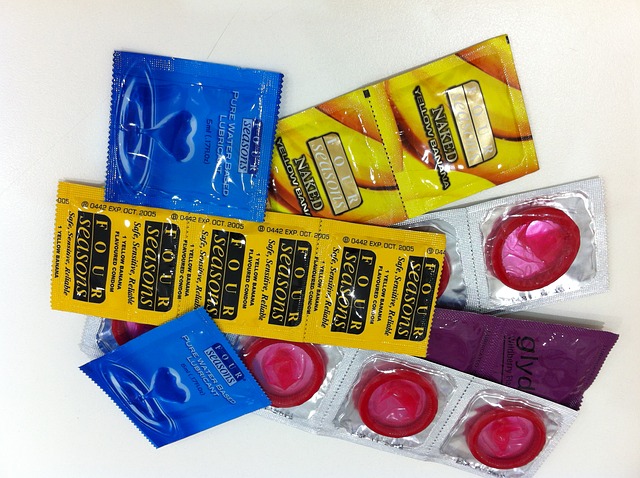
The condom story continues with significant advancement in 19th century when rubber condom was first produced in 1855 and later on several major rubber companies were mass-producing rubber condoms by the late 1850’s. Condom manufacturers created full-length, one-size-fits-all condoms in order to not fall off during intercourse. And with this attempt they could sell more quantity of condoms to be sold in pharmacies.
The hivplusmag.com wrote on their website that the condom business began to boom and coming out when the US government created a Division of Venereal Disease and put $4 million dollars budget to promote STD prevention nationwide by 1918.
This made condoms in the market came out with brands like “Sheik” and “Salome” and masculine named brands like “Stags,” “Knights” and the still-famous “Trojans”. Unfortunately, rather than focusing on condoms’ contraceptive abilities they came out with exotic product names.
In the 1920’s latex was invented and became a major innovation. Latex is made of rubber suspended in water and could last over 4 years longer as well as stronger and thinner surface than rubber. This made the price of condoms drastically reduced due to the shorter process. Before that rubber had to be individually hand dipped thus made the production time longer and complex.
The first automated latex condom manufacturing line was built in Ohio during the 1930. While Durex brand, one of the biggest condom manufacturers, introduces the first factory made non-latex condoms from polyurethane in the late 1900’s
Combined with oral contraceptive pill, condoms are the most popular birth control method in the world today. In terms of health benefit, the AIDS pandemic has made condoms increasingly important to fight the disease. Campaigns for condom use in non-marital sexual relationship have long been conducted for the benefit of individuals involved.
related post