TELEVISION SET
SEPTEMBER 7, 2021
Development Of Television Technology
The development of television technology can be traced back to the late 1800’s, at the time inventors experimented with many ways to have signals transmitted to a receiver. The first coaxial cable was invented during this time as a matter of fact.
This technology was the work of many individuals and inventors in the late 19th and early 20th centuries. Development was interrupted for a while during World War II and after the war all-electronics methods of scanning and displaying images became standard. Broadcasting expands and becoming an important mass medium for mass communication issues after the war.
The fundamental technical for television had been known since 1884 when Paul Nipkow granted the first television patent. In Germany, the German postal service had supported television in 1928.
Today the TV broadcasts can be distributed over the air by VHF and UHF radio signals in terrestrial system or by microwave signals from earth orbiting satellites and also by using wired transmission to customers by cable TV.
On June 11, 1929 four companies formed Fernseh AG in Berlin : Baird Television Ltd. from London, D.S. Loewe from Berlin, Bosch and Zeiss Ikon AG from Dresden. The Cathode Ray Tube CRT which delivered much brighter and clearer images had been established at Fernesh AG in 1932 and became the worldwide standard.
The first big public television broadcasts took place at the 1936 Olympics, in Berlin. The intermediate film system from Fernseh AG broadcast the events from various venues. This events generated a lot of interest, about 160.000 viewers watched it in homes and public viewing sites to witness the summer games using new technology.
Unfortunately this new technology was also used by the Nazi regime propaganda on daily television programming. In 1939 when the war started television companies faced force from Nazi agencies. This brought changes among the partners in Fernseh AG. Baird (British) and Loewe (with Jewish founder) left out of the company. Bosch acquired Zeiss Ikon’s shares and converted Fernseh AG into a limited leability company in 1939.
Post World War II saw the rapid growth of television technology development. The first national live television broadcast in the United States took place on September 4, 1951 at the Japanese Peace Treaty Conference in San Francisco during President Harry Truman’s speech. Then the first national color broadcast occurred on January 1, 1954 covering the 1954 Tournament of Roses Parade in Pasadena, Los Angeles on New Year’s Day.
But during the following ten years most network broadcasts in United States continued to be in black-and-white. Color broadcast started to sell in large numbers due to the color transition in 1965 when over half of all network prime-time programming would be broadcast in color by the end of that year. Color broadcasting in Europe was standardized on the PAL format in the 1960’s.
By the mid 1970’s black-and-white broadcasting were just a few UHF stations in a small basket. By the early 1980’s black-and-white televisions became very much rare to find or used as video monitor screens in lower cost consumer equipment. By the late 1980’s these areas switched to color sets.
In the 21st century the digital TV is replacing the old analog TV system. Digital TV is the transmission of audio and video by digitally processed signal. This signal can support more than one program in the same channel bandwidth but it wasn’t until the 1990’s that digital TV became a real possibility. In the late 2000’s digital TV transition started and across the world the deadline for analog shutdown is set by the 2010’s. The transition was expected to be complete worldwide by the late 2010’s.
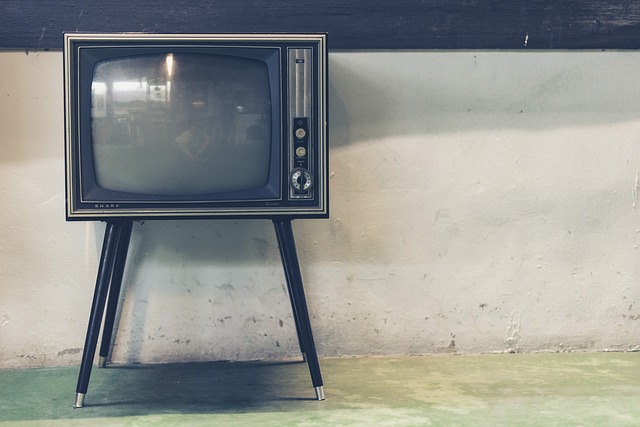
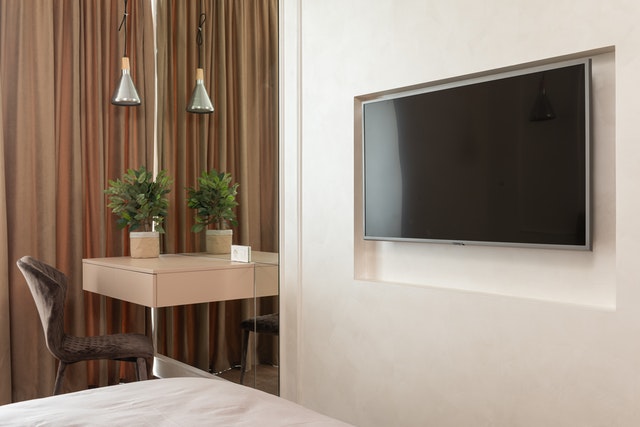
Not just the signal transmission, television set has reduced its size as well. Becoming thinner and lighter than before. A 27 inches CRT unit TV is a big equipment in terms of size and power hungry. Today the flat panel TV gradually replacing CRT units in market.
In the early 2000’s a flat panel television set was a luxury, expensive thing. By the late 2010’s a flat panel television is a common equipment in every home and public places worldwide.
Modern flat panel TVs are capable of high-definition display (720p, 1080p or 2160p) with ability to play multimedia files from a USB device. Later development brings the Smart TV, a television set that can connect directly to internet, making it able to stream video, audio and web content directly on television screen.
Source : wikipedia, sewelldirect.com, bosch.com
related post