FOR INDONESIAN FREEDOM
NOVEMBER 19, 2021
Maguwo 1947 : Above And Beyond The Call Of Duty – part 2
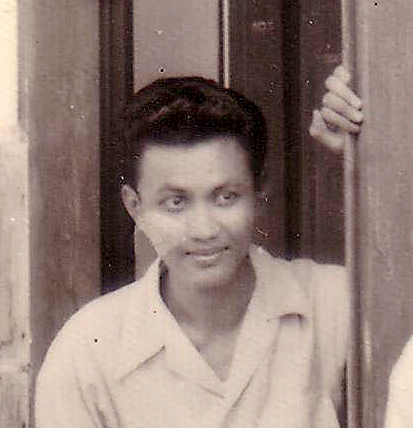
SOETARDJO SIGIT
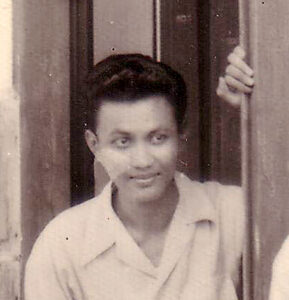
Part two of the historical bombing story of Salatiga as was told by Soetardjo Sigit himself, an Indonesian Air Force pilot.
In flying an aircraft, a pilot has to refer to the horizon to keep the aircraft level. If you want to climb, you keep the aircraft’s nose at a position slightly above the horizon, and to descend, you put it below the horizon. In night flying or instrument flying when the weather is bad, you have an artificial horizon in the cockpit to replace the real horizon.
But these old Japanese aircraft, these vital instruments were missing. So I had to rely on what instruments there were in the cockpit and on my luck again.
I succeeded in controlling the aircraft and started to climb to cruising altitude without any mishap while looking for my wing-man, Soeharnoko.
We were flying without radio and we didn’t have any electrical system at all for navigation lights or anything else.
I only had a flash light and this I held out high above my head, turning its light to all directions while circling the field but to no avail, I couldn’t locate Soeharnoko’s airplane.
So I decided to go ahead and flew alone to my target, the enemy position in Salatiga.
I didn’t have any difficulty in finding Salatiga, although it was still dark. The city’s light was still on and the Dutch seemed not to have the slightest suspicion of my impending attack.
I circled once above the city to locate my target, then made my first bombing run by diving towards the target. After releasing my left bomb, I climbed again to altitude to start my second run.
But I couldn’t drop my right bomb because the release-mechanism for my right bomb broke down. The wooden handle of the release-mechanism for my right bomb broke because it was rotten I presumed.
I didn’t worry then because I still had a third handle to release both left and right bomb. So I climbed back again to altitude and started my third run.
The third handle also broke and I still had the bomb hanging under my right wing. The bomb was armed already and I know the risk I would have to take, landing with a “live” bomb hanging under my wing.
Climbing back to altitude again I circled above the city while looking for means to drop the remaining big bomb. Then I located the three steel wires running from the broken handles along the left side of my seat.
By ducking low into the cockpit, I could grab these three wires but then I couldn’t see where I was going. So I decided to make a straight and level bombing run then and pointing the aircraft’s nose toward the target, I grabbed these wires and pulled with all my strength. To my intense relief, I saw the big bomb slide forward and away from my right wing.
Then I told my bombardier to throw his five bombs as quickly as possible. On hearing this he grabbed a bomb with each hand and started throwing it right and left. He made such a comical sight that I laughed out loud, glad that my troubles were over.
Then I headed for home, diving to tree top level and made a hedge-hopping flight all the way to Maguwo. I had to be back before the Dutch fighters came. I landed safely at 06:20 and my plane was immediately brought to a nearby village to be hidden by camouflage underneath some trees.
At 07:05 the first wave of the Dutch attacks came. On their fourth and last attack for that day at about five o’clock in the evening, they shot down our transport aircraft, a C-47 Dakota who was about to land and bringing in a load of medical supplies from Singapore.
One week earlier, this aircraft was flown by Air Commodore Adisucipto and Air Vice Commander Dr. Abdul Rachman Saleh as Pilots and Lieutenant Hadisumarno as Radio Operator to penetrate the Dutch blockade of our airspace.
They took off in the middle of a dark night heading for Singapore to pick up a load of medical supplies donated by the Indian Government and to be flown back by foreign pilots as an official “mercy flight” to Indonesia. Allegedly the Dutch officials were informed of this mission.
So it was beyond comprehension why those Dutch fighter pilots were able to do that barbaric act of shooting down an unarmed transport aircraft on an official “mercy flight”.
Victims of that murderous act were :
- Captain Pilot : Wing Commander Constantine (Australian)
- Co-Pilot : Squadron Leader Hazelhurst (British)
- Flight Engineer : Bhida Ram (India)
- Constantine (Australian)
- Air Commodore Adisucipto (Indonesian Air Force Officer)
- Air Vice Commodore Dr. Abdulrachman Saleh (Indonesian Air Force Officer)
- Lieutenant Hadisumarno (Indonesian Air Force Officer)
That ill-fated aircraft was a gift from the Indian Government to Indonesian as a support to its fight for freedom.
It wasn’t even changed into Indonesian registration yet and still has the Indian registration : VT-CLA.
related post