HUMAN INVENTION
DECEMBER 24, 2021
Timeless Invention Of Clock
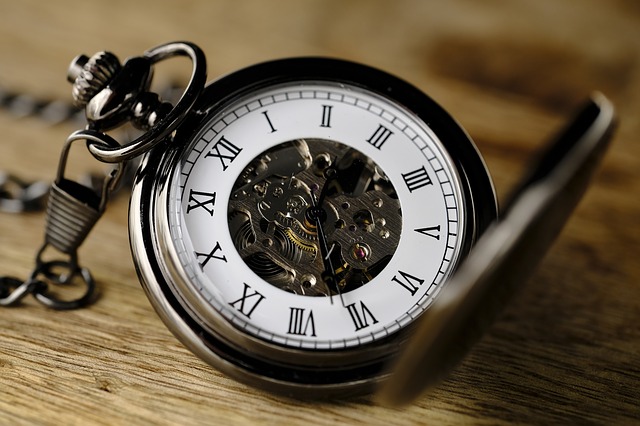
Timeless invention of clock, that help humans define the time has been through many developments for thousand of years.
According to historical records the first time keeping devices was developed by the Ancient Egyptians. They created what is called Shadow Clocks and able to divide one day time into 12-hour periods. They also used their obelisks to track and record the movement of the Sun from archaeological finds.
There was also a device to indicate time called sundial. A sundial is a device that indicates time by using a light spot or shadow cast by the position of the Sun on a reference scale. It is said that the inventor of this system is Theodosius, a mathematician and astronomer (160 BC – 100 BC). The universal sundial could be used anywhere on Earth. The first record of a sundial in Rome is 293 BC when the Romans adopted the Greek sundials.
Early mechanical clocks were invented in Europe around the start of 14th century. Those machines were the standard for timekeeping before the pendulum clock was invented in 1656 by Dutch astronomer Christian Huygens. He patented the first pendulum clock on June 16, 1657.
Before that, Galileo Galilei (1564-1642) from Italy designed a clock for escapement around 1637 and it was the earliest design of a pendulum clock.
Although many locksmith and many inventors from different countries created many different methods for measuring time, it was Peter Henlein from Nuremberg Germany who is considered as the inventor modern-day clock as we see today. He invented the “clock watches” in the 16th century. At the time many other clockmakers were creating similar devices.
Henlein’s first clock was made in 1510 according to historical records. By 1541 he was well known for his craft and received orders not for just small clocks but also the big tower clock in Lichtenau castle.

The most famous mechanical clock was designed and built by Henry de Vick in 1360. From this device, the next 300 years development of timekeeping were based on it.
Around 1680, British clockmaker, William Clement created the first grandfather clock. The anchor escapement system were made possible for these tall clocks, which allowed for much smaller motion in the pendulum.
In 1787, Levi Hutchins created the first American alarm clock in Concord, New Hampshire. It was initially a device that he made only for himself to wake him for his job and it only rang at 4 AM. Then in 1847, Antoine Redier, the French inventor was the first to patent an adjustable mechanical alarm clock.
The world’s oldest working clock is the clock dating from 1386 at Salisbury Cathedral, Wiltshire, UK. It was restored in 1956 after worked for 498 years and more than 500 million times ticking. The clock was commissioned by bishop Erghum.
There was also a mechanical clock already working in Milan, Italy in 1335 but the Salisbury clock is the oldest of its kind known to still be working. Still from England, Thomas Tompion (1639-1713) was an English clockmaker and mechanician who is considered as the “Father of English Clockmaking”.
related post