NATION HISTORY
JUNE 19, 2022
A Brief Story Of New Zealand
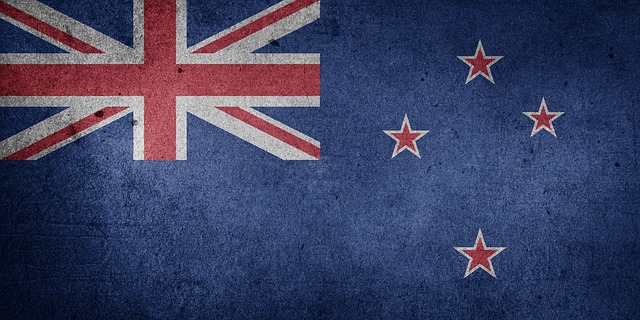
If you love a country with some very beautiful scenery and exotic tourist sites, then New Zealand is the perfect choice.
New Zealand (in Maori called Aotearoa) is an island nation in the southwest Pacific Ocean; about 1,500 kilometers southeast of Australia, across the Tasman Sea; and about 1,000 kilometers south of the Pacific island nations of New Caledonia, Fiji and Tonga.
New Zealand was one of the last major land masses to be inhabited by humans. This country with an area of 268,021 square kilometers has a population of about 5.1 million people and it is a British Commonwealth country and has a parliamentary democratic system of government.
Wellington (Māori: Te Whanganui-a-Tara or Poneke in ), is the capital city of New Zealand. It is New Zealand’s second largest urban area, and the most populous national capital of Oceania. Its population is 389,700 inhabitants.
New Zealand is a subtropical country which means it has four seasons. But because of its position in the southern hemisphere, the seasons are opposite to those in the northern hemisphere such as Europe and North America.
The percentage of religion in the country according to 2013 data is : Christian 44.3%, Hindu 2.1%, Buddhist 1.4%, Maori Christian 1.3%, Islam 1.1%, Other Religion 1.4%, non-religious 38.5%, unknown 8.2%. The Official language is English. Currency : New Zealand Dollar (NZD). Independence Day : 26 September 1907 (independence from Great Britain).
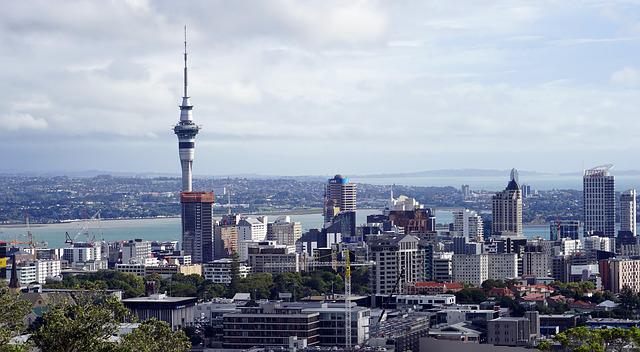
Aotearoa (often translated as “land of long white clouds”) is the Māori name for New Zealand, and is also used in New Zealand English. It is not known whether Māori had a name for the entire territory of this country before the arrival of the Europeans,
From a European perspective, New Zealand was first discovered on 13 December 1642 by the Dutch navigator Abel Tasman and explored by Captain James Cook in 1769.
Abel Tasman called it Staten Landt, assuming that it was connected to the great landmass of the same name at the southern tip of South America. In 1645 the Dutch cartographers changed its name to Nova Zeelandia, taken from the name of a Dutch province, Zeeland. British explorer James Cook later anglicized the name to “New Zealand”.
However, this narrow perspective does not tell the whole story and does not make it clear that credit for the discovery and early exploration of New Zealand should go to the Māori, a group of Polynesians who first settled in New Zealand between 1250 and 1300.
When Europeans first landed in New Zealand, several Māori were killed in battle with Cook and his crew.
The effects of this first meeting are felt to this day. At Gisborne, Cook’s statue has been repeatedly vandalized with graffiti and had to be replaced with art that reflects Māori culture and stories
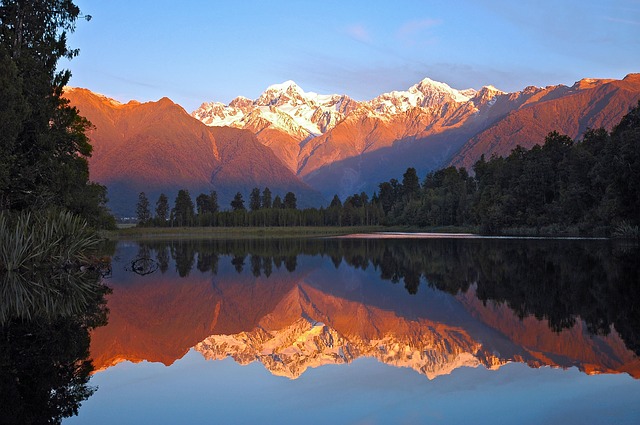
New Zealand has a lot of tourist attractions that can be enjoyed. From stunning natural landscapes, rich Māori culture, world-class skiing to the Lord Of The Rings movie shooting sites. New Zealand consists of two main islands and smaller islands.
Māori have several traditional names for the two major islands, including Te Ika-a-Māui (Māui fish) for the North Island, and Te Waipounamu (green rock waters) or Te Waka o Aoraki (Aoraki canoe) for the South Island.
In 1840 Britain, and Māori signed the Treaty of Waitangi which made New Zealand a colony of the British Empire.
According to Māori myth, New Zealand (Aotearoa in Māori) was discovered by Kupe, a fisherman and Rangatira (tribal chief) from Hawaiki. The year when Kupe arrived in New Zealand is debated, as is the year the Māori ‘Great Fleet’ arrived.
Stephenson Percy Smith, a 20th-century anthropologist, translated the story recorded by Hoani Te Whatahoro. In this story, the arrival of the Kupe takes place in 750 and a large migrating fleet arrives in 1300.
A 2010 study, led by Janet M. Wilmshurst of Landcare Research New Zealand, took carbon samples and found evidence of human colonization. The radiocarbon dating, evidence of deforestation and mitochondrial DNA diversity within Māori populations suggest New Zealand was first settled by Eastern Polynesians between 1250 and 1300, inferring a long series of journeys through the south Pacific islands .
related post