NATION HISTORY
DECEMBER 8, 2022
A Brief Timeline Of Scotland
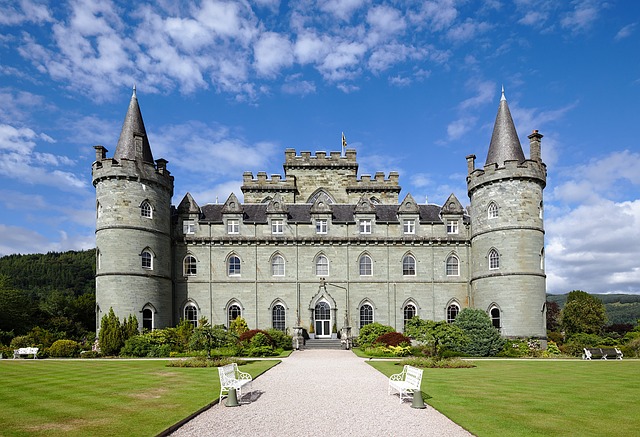
A short history of Scotland, a country with important roles during the Industrial Revolution and places of many beautiful nature sites.
OVERVIEW
The Kingdom of Scotland (Scottish Gaelic: Rìoghachd na h-Alba) is a country located in Western Europe, on the northern third of the island of Great Britain.
The word “Scotland” comes from Scoti, Latin for Gaelic (Gaelic). The Late Latin word Scotia (land of the Gaels) was originally used to refer to Ireland. In the 11th century, Scotia began to be used to refer to the Gaelic-speaking population living north of the River Forth, along with Albania or Albany, both of which are derived from the Gaelic language Alba.
The use of the words Scots and Scotland to refer to the whole of what is now Scotland dates back to the Late Middle Ages.
PREHISTORIC
Humans had inhabited Scotland for at least 8,500 before written history about Britain appeared. In interglacial times (130,000-70,000 BC), Europe’s climate was warmer than today, and humans may have reached Scotland, although archaeologists have found no evidence for this claim.
Glaciers later formed in Britain, and it was not until they were gone that Scotland became habitable again around 9600 BC.
Scotland’s history dates back to the arrival of the Romans in the first century of our Common Era, when the Province of Britain stretched northwards to the Antonine Walls. The area to the north of the Antonine Wall is called Caledonia, the land of the Pikti people, the people who rose up against and pushed back the Romans behind Hadrian’s Wall.
Several other sites found around Scotland indicate people using boats as well as bone, stone, and antler tools. Agriculture during the Neolithic period led to the emergence of permanent settlements.
Evidence of stone houses found at Knap of Howar in Papa Westray date to approximately 3500 BC and a village of similar houses at Skara Brae, Orkey, which date to approximately 3000 BC.
THE KINGDOM ERA
In the 7th century, Irish missionaries came to spread Celtic Christianity to the Pikti people who still adhered to their ancestral religion.
After the arrival of the missionaries envoys of Pope Gregory to England, the king of the Picts, Nechtan mac Der-Ilei, decided to replace a large number of Celtic Christian practices with Roman Christian practices, thus limiting the influence of the Gaelic tribes over his kingdom, as well as avoiding war with the Anglican kingdom, Northumbria.
The Kingdom of Scotland was united under the Chinaeda meic Ailpín dynasty. Members of this dynasty repeatedly fought each other for the throne.
The last king of the Chinaeda meic Ailpín dynasty, Máel Coluim II, died in the early 11th century without leaving any descendants, so that the Scottish throne was inherited by the Dùn Chailleann dynasty, namely by the son of King Máel Coluim II’s daughter and her husband who came from the Dùn dynasty Chailleann.
THE BRITISH ERA
The British Empire under King Edward I took advantage of this uncertain situation to launch a series of conquests, which led to the Scottish War of Independence. The absolute victory against England made Scotland a completely independent and sovereign kingdom.
On 22 July 1706, the Treaty of Unity was concluded by the Parliaments of England and Scotland, and a year later, the Act of Unity was passed by both parliaments to create the Kingdom of Great Britain, which entered into force on 1 May 1707.
Although the Scottish Enlightenment is considered to have ended by the 18th century, Scotland’s contribution to British literature and science continued for the next 50 years thanks to figures such as physicists James Clerk Maxwell and Lord Kelvin, and inventors and industry experts such as James Watt and William Murdoch, whose works were instrumental in the development of the Industrial Revolution throughout Great Britain.
MODERN DAY
During the Scottish Age of Enlightenment and the Age of the Industrial Revolution, Scotland was one of Europe’s commercial, scientific and industrial superpowers, but Scottish industry suffered a serious decline after World War II.
In recent decades, Scotland has experienced a kind of cultural and economic renaissance. One of the drivers of this revival is the revival of the financial services sector and the implementation of oil and gas mining activities in the North Sea.
related post