NATURE
APRIL 7, 2023
The Amazing Amazon Rainforest

This largest rainforest in the world is truly an amazing place with its countless exotic species of flora and fauna.
OVERVIEW
The Amazon Jungle (Brazilian Portuguese: Floresta Amazônica or Amazônia; Spanish: Selva Amazónica or Amazonía) is the rainforest in the Amazon, South America.
The Amazon forest is the largest rainforest in the world. This forest has parts that are unexplored, dark with dense trees and wild animals.
This region, which is also called Amazonia or the Amazon Basin, covers an area of seven million square kilometers, although the forest alone is 5.5 million square kilometers, located in nine countries: Brazil (with 60 percent of the forest), Colombia, Peru, Venezuela, Ecuador , Bolivia, Guyana, Suriname, and French Guiana.
GENERAL PROFILE
The word “amazon” comes from the word “amazonas” which is the name of a tribe in Greek mythology. Amazonas is a tribe consisting only of female warriors who make conquests with expeditions.
The Amazon also includes the most extensive tropical forest in the world, and has two other names, namely “the lungs of the world” because it produces 30% of all oxygen on Earth, and ”green hell” because every year the river overflows. The dense forest makes everything visible and the last due to the many attacks from the mostly unnamed beast bugs.
In the middle of the Amazon forest, stretches the Amazon river which has a concave shape like a bend and carries the Amazon’s tributaries to flow to the northern part of South America. The length of the river is 6,500 km which makes this forest one of the forests with the longest river in the world.
According to the World Wildlife Fund (WWF) the extent of the Amazon forest area makes it capable of absorbing between 90 and 140 billion tons of carbon dioxide emissions. The size of the Amazon forest already covers 1.4 billion hectares of forest. This figure is a percentage of half of the tropical forests on earth.
FLORA AND FAUNA
According to the Amazon Cooperation Treaty Organization (ACTO) ) that the Amazon forest is a nature reserve with a quarter of the living species on earth found in the Amazon rainforest.
Contains diverse flora and fauna, which has approximately 40,000 species of plants and 16,000 species of trees, 5,600 species of fish, 1,300 species of birds, more than 430 mammals, 1,000 amphibians, 550 insects and more than 400 reptiles.
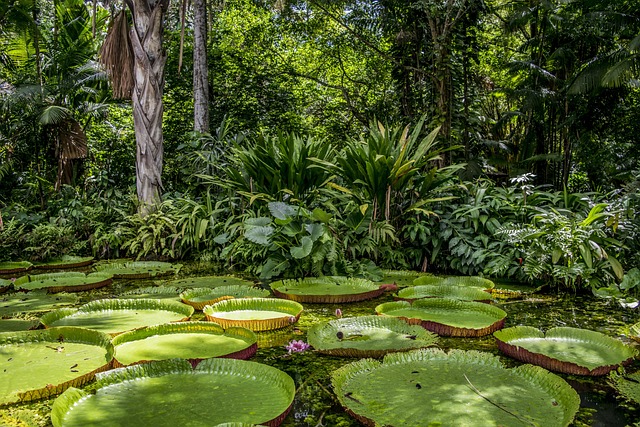
The vegetation that grows in this forest also varies, ranging from guava, laurel, palm, acacia, rosewood, Brazil nut, rubber trees, mahogany, giant lotus, orchids, jarda sapodilla, banana trees, kapok trees, elephant ears and Amazonian cedar.
These trees influence the rainfall cycle throughout South America and add about 20 billion tons of water to the air each day.
In fact, one of the largest trees in the Amazon emits more than a thousand liters of water in 24 hours. Which amounts to about 10 average sized bathtubs.
Several types of animals in this forest are jaguars, tapirs, anacondas, boas, blue morpho butterflies, harpy eagles, sloths, cainman, wild boar, fish, and many more.
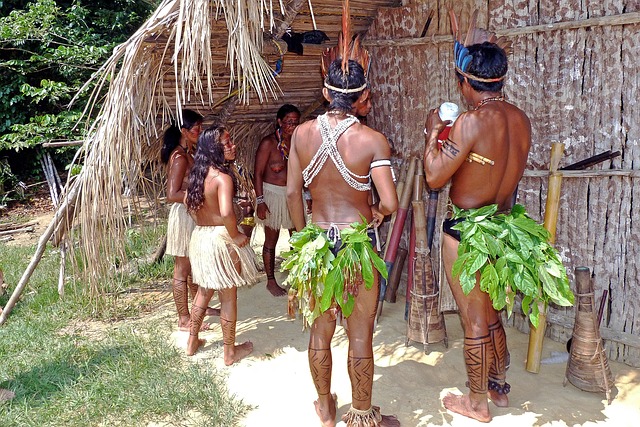
The Amazon forest is also home to a number of people, it is estimated that there are around 47 million people living there. This includes about 2 million indigenous people.
This plurality even makes this place inhabited by more than 400 different indigenous groups. Because it is inhabited by hundreds of different indigenous groups, this place also has around 300 languages that develop in the community.
CURRENT THREATS
However, actually the ecosystem in the Amazon is being threatened due to massive deforestation practices or the phenomenon of large fires that sometimes occur.
In the first nine months of 2022, the Amazon recorded the highest deforestation rates, particularly in the Amazon Forest in Brazil.
related post