NATURE BEAUTY
FEBRUARY 2, 2023
Polar Light : A Brief Guide To Aurora
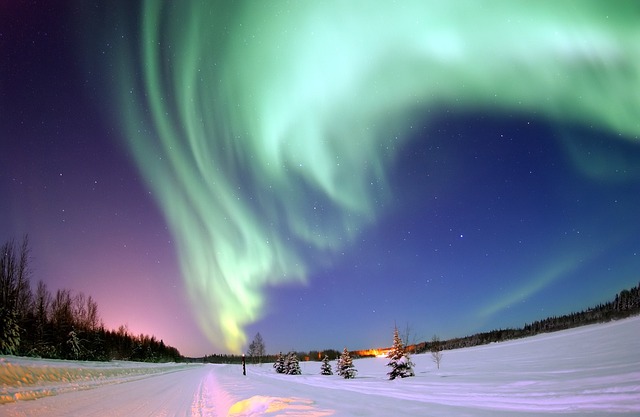
Aurora is a natural phenomenon that produces a flaming glow in the night sky from the interaction of magnetic field and solar wind.
Aurora or polar light takes place in the ionosphere layer of a planet as a result of the interaction between the planet’s magnetic field and charged particles emitted by the Sun (solar wind).
On Earth, auroras occur in the area around its magnetic North and South Poles.
The process of the aurora is formed due to atoms or molecules colliding with each other with charged particles, especially electrons and protons from the sun. These particles are sent flying at over 500 miles per second and are sucked in by the Earth’s magnetic field around the north and south poles.
HISTORY
The name Aurora was used first time by Pierre Gassend, a scientist in the 17th century. The term aurora was first used by Galileo Galilei in 1619 who studied this amazing light.
AURORA TYPES
1. Aurora Borealis
The Aurora Borealis occurs in the north. It is called borealis because it is taken from the name of the Roman Dawn God namely Aurora and also the Greek name for the north wind namely Boreas. This is because in Europe, the aurora often looks reddish on the horizon or the north pole so that it looks like the sun will rise in that direction.
The Aurora Borealis usually occurs in September and October and March and April. The Aurora Borealis will generally be seen in the Antarctic region, namely Alaska, Canada, Scandinavia and also Russia.
2. Aurora Australis
This is an aurora phenomenon that occurs in the south with almost the same characteristics as the Aurora Borealis. As the name suggests, this aurora generally occurs in the southern hemisphere such as Australia. Sometimes, the Aurora Australis is seen on mountain peaks in tropical climates, including the highest mountain in Indonesia.
COLOR
The colors produced by the aurora occur due to the collision of different particles and also molecules or atoms. It turns out that these colors are not formed automatically, but are influenced by the following factors.
- Green color. This color is affected by the release of hydrogen gas at an altitude of 100-150 km from the earth’s surface.
- Red. this color is produced the same as in green, namely the excitation of oxygen. This color is produced at an altitude of 200-250 km from the earth’s surface.
- Blue. This color is caused by the release of nitrogen molecules.
- Pink. This color is influenced by hydrogen atoms which are located lower in the atmosphere so that this pink color is located below the green color.
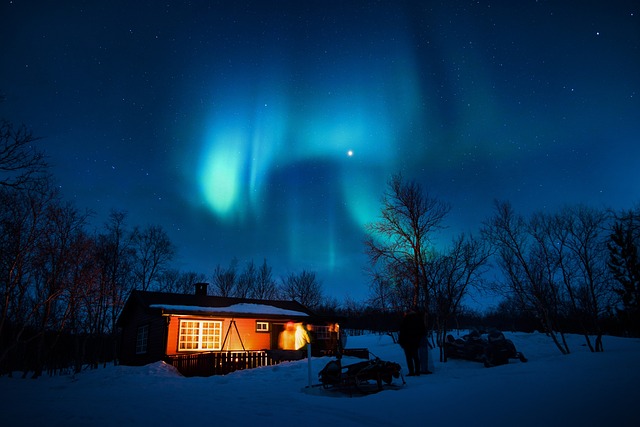
There are two main gases in the atmosphere that are most influential in the formation of aurora light:
- Carbon Dioxide can produce the two main colors of the aurora, namely green-yellow. This color is most often seen. Second one is red but this color is rarely seen.
- Nitrogen, which in its ionized state gives a light blue color. In the neutral state, the nitrogen molecule produces a purplish-red color.
WHEN TO WATCH
Apart from location, weather and pollution, light also affects the quality of the aurora. In Alaska, the best time to see the aurora is in the months of March and September to late October.
At that time the sky was dark and the weather was very bright. In summer, the night sky is not so dark. On the other hand, in winter, the air becomes too cold, thus disturbing the comfort of those who want to observe it.
related post