CLOTHING
JUNE 20, 2023
Bra History : A Long Evolution Of Perfection
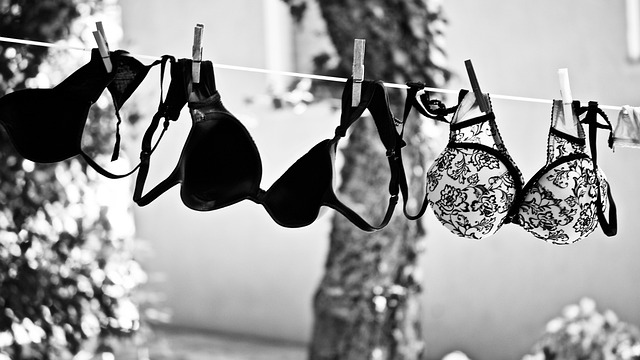
History of bra is a long story before it reaches the shape like the modern one today.
OVERVIEW
Bra or bras are form-fitting undergarments designed to support or cover a woman’s breasts. Bras are designed for many purposes, including increasing bust size, creating cleavage, or for other aesthetic or practical considerations.
Bra is often called BH. The term itself stands for Breast Hidden, meaning breast cover. Some call it Breast Holder (England), some call it Buste Hounder (Netherlands).
ORIGIN
Quoting Vogue, this kind of cloth has been used for centuries to support women’s breasts. A mosaic of bikini girls from the Villa Romana del Casale in Sicily in the 4th century AD, shows a series of young women wearing bandeau tops that support them while engaging in sporting activities.
The first bra most likely originated in Ancient Greece, when women used linen cloth over their breasts and then tied them back. Later fragments of linen textiles found in East Tyrol, Austria, which date from 1440 and 1485, are believed to be bras.
Quoting from The Exploress, in India the first mention of a bra comes from writings from the 1st century AD.
In ancient China there were several items that used like bras, including xieyi, a tunic-style underwear worn in the Han Dynasty around 200 BC, and moxiong, a one-piece garment worn around 500 AD.
Meanwhile in Vietnam, there is a traditional underwear called yem, an evolution of the traditional Chinese underwear, dudou, which was brought to Vietnam during the Qing Ming Dynasty.

MODERN BRA
According to Life magazine, in 1889 Herminie Cadolle from France invented the first modern bra. The bra appears in corset catalogs as a two-piece undergarment, which she originally called corselet gorge, and later le bien-être meaning well-being.
The shape still resembles a corset, which is the predecessor of the bra. The difference is, Cardolle divides the woman’s underwear into two parts, namely the stomach and chest.
Cadolle patented his invention and showed it at an exhibition in 1889. The company claims that Herminie freed women from the torture of wearing corsets by creating the first bra.
In 1905, the uppers part began to be sold separately as soutien-gorge, the name the bra is still known in France. She also introduced the use of stretchy fabrics for bras.
Even though the forerunners were there, women at that time preferred to wear corsets. This habit was lost during World War I, because there was pressure so that the metal on the corset was needed to produce war equipment.
Brassiere, which is the root word for bra, was first used by Vogue magazine in 1907. In 1912, the term brassiere was listed in the Oxford English Dictionary.
APPLICATIONS
Bras have become very important beyond their function as clothing. A woman’s choice of what kind of bra to wear consciously and unconsciously is influenced by social perceptions of the ideal female body shape, which change over time. The bra has become a fashion item and cultural statement that is sometimes deliberately expressed by the wearer or even worn as outerwear, and has a physiognomic aspect.
Quoting from Humanitas University, a bra can also prevent spinal problems, back pain, and improve posture. The bra is able to maintain the posture and position of the mammary glands and chest muscles in place.
NO BRA DAY
Every October 13 is celebrated as No Bra Day or Day Without a Bra. Although there are still pros and cons, on this day women are encouraged not to wear bra with the aim of raising awareness of the dangers of breast cancer symptoms and reminding them to undergo regular early examinations.
The origins of No Bra Day can be traced back to two days in history: July 9, 2011 and October 19, 2011. Originally No Bra Day was only observed in Toronto, Canada, every October 19, 2011.
Before becoming No Bra Day, the name was Bra Day which was coined by Dr. Mitchell Brown.
related post