ANCIENT HISTORY
JULY 28, 2022
Ancient International Trade : The Story Of Silk Road
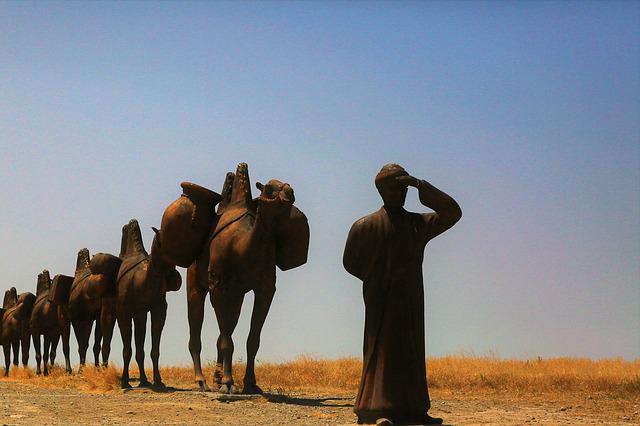
The Silk Road was one of the most important trading routes in the past in human history
The Silk Road was a trade route through Asia that connected East and West by being connected by merchants, travelers, monks, warriors, nomads by means of caravans and ships. It is a term to refer to a very busy trade route because it is a crossroads for trade between various countries in the world.
It was an ancient international trade route that dates back to Chinese civilization and connecting route that brings together traders from the west and east to carry out trading activities.
The term ‘Silk Route’ was first used by the German geographer Ferdinand von Richthofen in the 19th century because of the large volume of trade commodities from China in the form of silk.
COMMODITIES
The Silk Road was not a road, but a complex of routes that included land and sea routes that merchants had to pass to reach their place of business.
The actual route often changes due to weather, natural disasters, and the threat of bandits that threaten the safety of traders. Merchants often used camels to carry their goods while crossing the Silk Road.
Because silk is only produced in China, they monopolized the production and trade of silk. So that China becomes the dominant player in this path.
People prefer to walk in winter due to the presence of water and also goods sold in summer are much more expensive than winter. On this Silk Road there is a resting place shaped like a fortress called caravanserai. Inside there are many shops, inns, and the most is a place for animal trade.
THE ORIGIN
Built during the Han Dynasty and officially opened in 130 BC, the silk route was still in use until 1453 AD, when it was closed when the Ottoman Empire boycotted trade with China.
It connected Chang’an, China, with Antioch, Syria, as well as other places at various times. The influence of this line carried over to Korea and Japan.
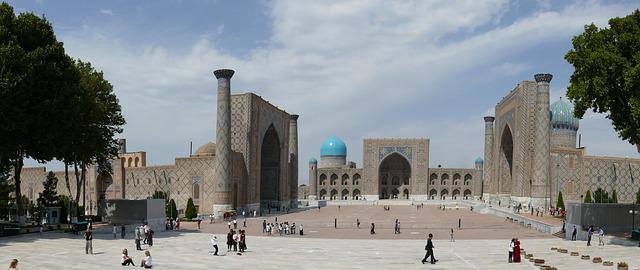
The largest and largest city on the Silk Road was Samarkand, Uzbekistan, a gathering place for Chinese traders and a major route before continuing on to Europe.
Samarkand is very famous for having carpenters, astronomers, writers, and the existence of aqueducts that can supply water for 200 thousand people.
GENERAL ROUTE
The Continental Silk Road divided into northern and southern routes as it extended from the trading center of North China and South China.
The northern route passes through the Bulgar-Kipchak to Eastern Europe and the Crimean Peninsula, and from there to the Black Sea, the Sea of Marmara and the Balkans to Venice; the southern route passed through Turkestan-Khorasan to Mesopotamia and Anatolia, and then to Antioch in Southern Anatolia to the Mediterranean Sea or via the Levant to Egypt and North Africa.
Analyzing the route, some historians believe that the black plague that invaded Europe may have been transmitted by traders from the Silk Road, causing mass deaths that wiped out parts of Europe’s population.
Maritime trade is another very important branch of this global trade network. Most famously used for the transportation of spices.
The maritime trade routes were also known as the Spice Roads, which supplied markets around the world with cinnamon, pepper, ginger, cloves and nutmeg.
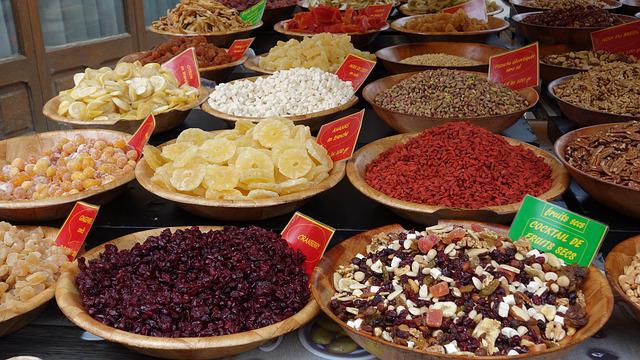
Although silk is the largest trade in this route, there are several other products that are traded. Such as textiles, spices, grains, vegetables and fruit, animal skins, tools, woodworking, metal work, and many others.
Marco Polo was the first European to experience venturing into China, one of history’s most famous figures via the Silk Road.
MODERN DAY RECOGNITION
Although it has been nearly 600 years since the Silk Road was closed to trade between countries, this route has left a wealth of economic, cultural and historical heritage that is still relevant today.
Reporting from the official UNESCO website, designated on June 22, 2014 the 5,000 kilometer Silk Road from China to the Zhetsyu region in Central Asia as a world heritage site (World Heritage Sites)
According to UNESCO, the road network formed by the Silk Road as a whole has a length of up to 35 thousand kilometers.
related post