TRANSPORTATION
DECEMBER 14, 2021
Incredible Evolution Of Train
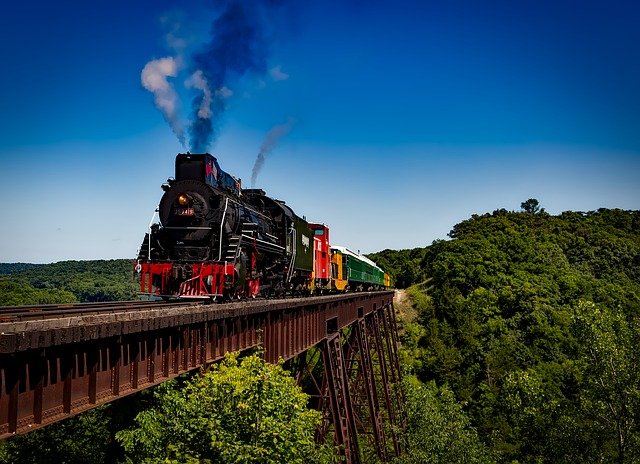
Incredible evolution of train, from steam powered locomotive to the super fast maglev passenger train this is the ultimate train history.
A train is a series of connected vehicles that run along a railway track and transport people or things. The word “train” comes from the Old French trahiner, which derived from the Latin language trahere meaning “to pull, to draw”. The earliest railways used animals : horses, donkeys, cows or even people to pull loaded wagons along wooden planks or iron rails.
The invention of train is important since trains enabled modern industries to grow bigger with faster pace. It also makes people travel faster and farther with ease. There is no dependency to animals like horse anymore.
The first train was built in 1804 by Richard Trevithick, a British mining engineering and inventor. It was the practical steam locomotive and the speed was about 10 mph. It managed to pull 25 tonnes of iron material and 70 people over the distance of 10 miles. It moved on the first full-scale working railway steam locomotive across the United Kingdom.
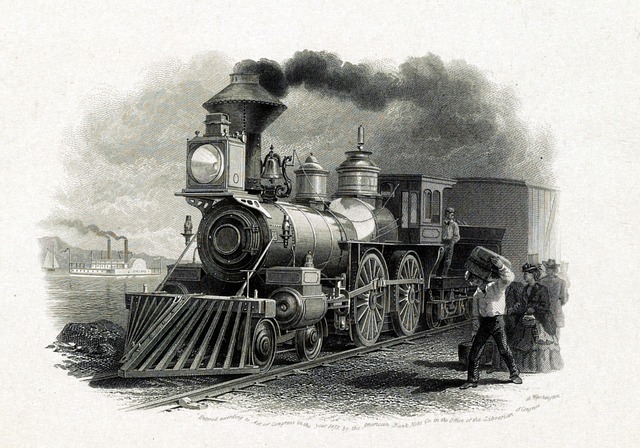
The vehicle used high-pressure steam to drive the engine by one power stroke with a large flywheel to even the piston rod action. Steam locomotives relied upon burning coal to heat water inside a boiler. When the water vaporized, the steam was forced through valves that would push the piston back and forth. The motion of the piston was transferred to the wheels and move the train.
On September 27, 1825 the world’s first public railway was officially opened. It connected collieries near Shildon with Darlington and Stockton-on-Tees in County Durham. The invention of wrought iron rails made the Britain had the first modern railways in the world.
In 1829, engineer and inventor George Stephenson built the Locomotion No. 1, the world’s first successful passenger train. This led Stephenson and his sons to establish a train business for passengers across the UK, Europe and United States. Stephenson is regarded as the Father of Railways.
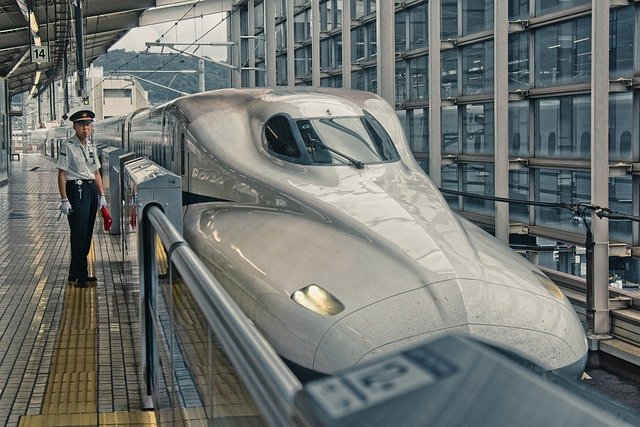
Today there are about 350.000 trains in the world, including passenger and freight trains. There are three main types of passenger trains : long-distance, short-distance and trains within cities. The leader of a train is commonly called the conductor in North American railway. In English a conductor is also known as guard or train manager.
The most famous railway in history is the Orient Express. This also a romantic train route in the world, a historic date. The largest rail network in the world is in India, the country is a must-see by train while the country with the smallest railway is Iceland. There are only three railway networks but those are not a public railway network.
The longest railway in the world is the Trans-Siberian Railway (the Moscow-Vladivostok line). Its spans is 9.289 km and one of the busiest railway lines in the world.
In 2004, the Shanghai Maglev train was opened and was the fastest commercial passenger maglev in operation with speed of 431 km/h. In 2021 Japan’s L0 Series Maglev hit the speed at 602 km/h and is the fastest maglev train in the world. In 2007, a TGV train broke record of 574 km/h. This is the fastest conventional wheeled train in the world.
related post