CLASSICAL
APRIL 7, 2021
the genius works of Mozart
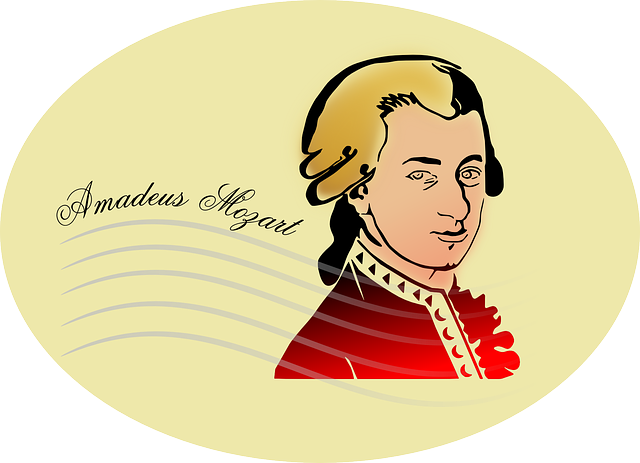
The prodigy kid like Mozart was a very rare talent that only appears once in a few decades.
Wolfgang Amadeus Mozart was born on January 27, 1756 in Salzburg, Austria. He was a great and influential composer of the Classic period. This son of Leopold Mozart (1719 – 1787) and Anna Maria Pertl (1720 – 1778), played few minuets effortlessly at the age of four and by the time he reached the age of five he started to compose and playing violin.
It was not long until he was also playing the piano, viola and organ. His father was a composer, teacher and chapel master in the court orchestra of archbishop of Salzburg. Mozart was the youngest of six children, but only two of these children survived past infancy. His only surviving sibling was his oldest sister Maria Anna, nicknamed Nannerl.
He was baptized as Johannes Chrysostomus Wolgangus Theophilus Mozart. “Theophilus” is from Greek, meaning “loved by God” but he preferred the Latin translation of it – Amadeus. He has been widely accepted as one of the greatest composers of the Classical period and also one of the greatest artists of all in the history of music.
In 1762, Leopold began to take Mozart and his sister traveling to perform around Vienna, Austria. Not just to common people but also in front of the Imperial Court, as well as in Munich at the court of Maxmillian III of Bavaria and the Imperial Court of Prague. In 1767 when he was 11 years old, Mozart wrote his first opera “Appolo et Hyacinthus” and had premiere in Salzburg.
For the next few years, his father took his family around Europe such as Paris, London, Mannheim and Zurich. Leopold believed it was his duty to God to show to the world this “miracle” of his two child prodigies. In London he met Johann Christian Bach and gained popularity across England.
“The music is not in the notes, but in the silence between.” – Mozart
At the age of fourteen in 1769, Mozart set off for Italy with his father and was well received in big cities such as in Milan, Rome and Bologna. During these years of travel in Italy he produced his first large-scale settings of opera : Mitridate (1770), Ascanio in Alba (1771) and Lucio Sillia (1772) and his first string quartets. Between journey in Italy, Mozart and his father returned to Salzburg where he wrote some other works.
In August 1777, Mozart began another musical tour but this time he went along with his mother, since Leopold could not get permission to leave his job. They first heading to Munich then to Augsburg and then to Mannheim. In this city he met the music copyist’s daughter Aloysia Weber and fell in love with her. Aloysia rejected him and married to Joesph Lange, But her sister, Constanze, was available and they began to start a relationship.
At first his father rejected the idea of Mozart getting married because it would interrupt his career. It was the worst time of his relationship with his father, but eventually Leopold allowed the two of them to marry. Though they got separated for a brief period Mozart and Constanze got married at St. Stephen’s Cathedral, on August 7, 1782. Of all six children they had, only two survived infancy.
The youngest child of these children was Franz Xaver Wolfgang Mozart (July 26, 1791 – July 29, 1844) also known as Wolfgang Amadeus Mozart Jr. Born in Vienna, five months before his father’s death, he was also a composer, pianist, conductor and teacher of the late classical period. His family called him by the name Wolfgang.
Between 1782 and 1783, the works of Johann Sebastian Bach and George Fredric Handel becoming familiar with Mozart and inspired him to compose in the baroque style and made him developed his own unique musical skill and compositions. In 1784, he met Haydn and the two becoming lifelong friend.
During this time, he used to choose unconventional venues like a big hall in a building or a ball room to perform his concerts. Today his concerts are still regarded as benchmarks in the classical music scene.
Mozart’s final symphony (no. 41) is called the Jupiter symphony and became commonly known around early 1800’s. The name was given by a German violinist and composer Johann Peter Salomon after Mozart’s death.
His final project Requiem, had a financial supporter unknown to Mozart. It was believed that Mozart wrote the project for his own dead. It was then completed by his pupil Franz Sussmayer after his death.
Mozart died on December 5, 1791 at the age of 35 at his home in Vienna, Austria. The cause of his death was officially recorded as Hitziges Frieselfieber or severe miliary fever, some kind of rash that looks like millet seeds. But this was more of a description of the symptoms because researchers suggested there were 100 probable causes of death, thus his cause of death is still uncertain.
Mozart produced over 600 works in his short lifetime, including 53 symphonies, concert, dozens of masses and liturgical works, chamber, 20 operas, choir and lyric theater pieces. His finest operas works include The Marriage of Figaro, Don Giovanni, Cosi fan tutte and The Magic Flute.
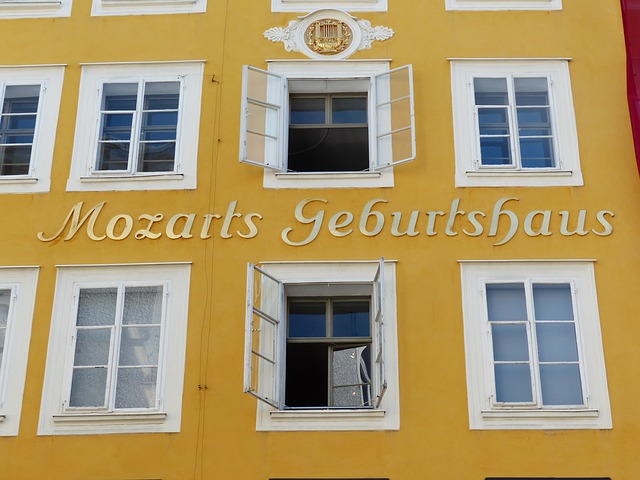
He also wrote a book with title, A Treatise on the Fundamental Principles of Violin Playing. His birthplace in Salzburg, Austria, a 3-bedroom apartment in the Getreidegasse No. 9 is now a museum and attract thousand of visitors every year. Mozart was buried at the St. Marx Cemetery outside the city on December 7 1791.
related post