ANCIENT STRUCTURE
MAY 18, 2022
The Great Sphinx Of Giza : An Ancient Majestic History
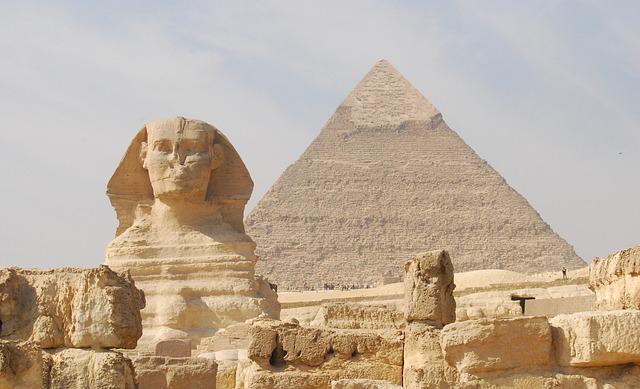
A true monumental structure from ancient Egypt with ancient majestic history background.
ORIGIN
The sphinx is a mythical creature with the body of a lion with the head of a man in Egyptian mythology. Sphinx is also known in Greek mythology as a creature who poses puzzles.
Derived from the Greek grammar Sphingein, the Sphinx means ‘to bind or squeeze’. The Sphinx itself is known as a portrait statue of a king.
For some, it is believed that the name is a word change from the ancient Egyptian Shesep-ankh, a name given to a statue of a nobleman in the Fourth Dynasty.
In Greece, the Sphinx is not identified with its appearance. The Greek Sphinx is generally seen wearing a flat-shaped hat with flamel-like projections on it.
Depictions of the Sphinx disappeared from Greek art for about 400 years after 1200 BC. However, the depiction continues in Asia in poses similar to those of the Bronze Age.
EARLY SPHINXES
According to ancient Egyptian mythology, the sphinx is a creature with the head of a human and the body of a lion.
The first Sphinx was created during the reign of the rulers of the Fourth dynasty who ruled from 2723 BC to 2563 BC and is believed to represent Queen Hetepheres II of the same dynasty. Now this Sphinx is kept in the Cairo Museum, Egypt.
In addition, about 900 sphinxes have been found in the temple of the god Amun. The sphinxes were created by King Ramses II.
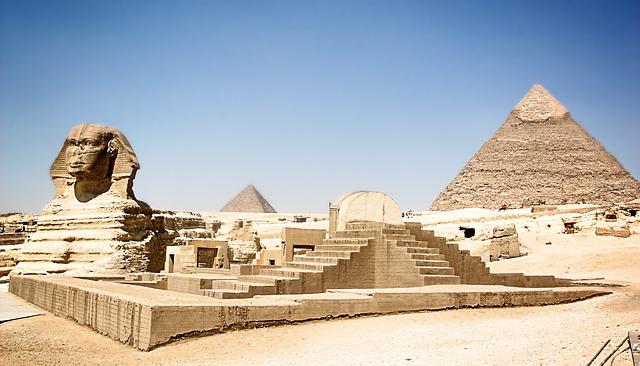
THE GREAT SPHINX
Initially, the most famous Sphinx in the field of art is the Great Sphinx and is located in Giza, Egypt and dates from the reign of King Khafre. The king was the 4th king of the 4th Dynasty in about 2575 to around 2465 BC.
According to Egyptian beliefs, the Sphinx was created to guard important areas such as cemeteries and temples.
Researchers estimate that this human lion-shaped monument is about 4,500 years old (NBC News, 1999), and was built for King Khafre who lived around 2603-2578 BC.
This relic of the past which has a height of 20 meters, a length of 73 meters and a width of 19 meters holds various mysteries. It is one of the largest statues in the world made of a single solid stone, and is believed to have been built by the Ancient Egyptian civilization in the third millennium BC.
The Sphinx can be found close to the tombs of the Pharaohs, as it is considered the guardian of the Pharaohs’ tombs. This large statue with the body of a lion and a human head has become a major landmark of Egypt.
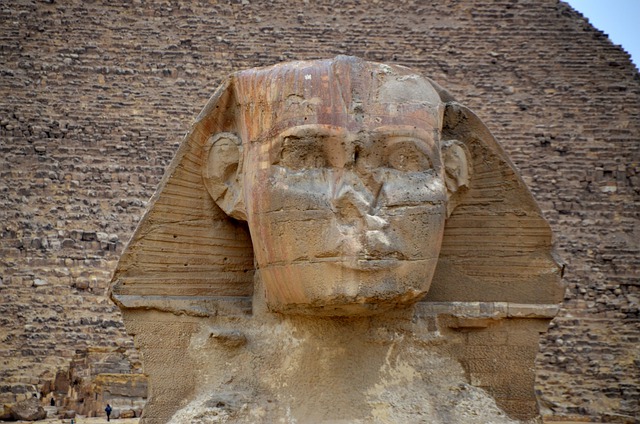
The Great Sphinx at Giza is known for its lack of a nose. As legend has it, Napoleon’s army destroyed this body part while fighting the Turks in 1798. It is said that the sphinx lost its nose while being targeted by Napoleon’s army.
The Sphinx is located southeast of the pyramid, while the exact date of its construction is unknown, the general consensus among egyptologists is that the head of the Great Sphinx bears a resemblance to the pharaoh Khafra, while a minority of 20th century geologists claim evidence of water erosion in and around the enclosure Sphinx which will prove that Sphinx preceded Khafra.
STRUCTURE COMPOSITION
The Sphinx of Giza has a stone slab with several inscriptions located between its legs. This slab was added to the original monument by King Thutmose IV. The inscription tells of the dream of the King (Thutmose) so it is also called the ‘Dream Stela’.
The Sphinx of Giza is carved straight out of a limestone hill. The structure has several layers of limestone. Compared to other parts of the body, the head is made of a tougher layer so it is more resistant to erosion.
On the other hand, the base of the structure is made of a softer layer that is prone to erosion even shortly after the sphinx was created. Strong desert winds and the annual flooding of the Nile cause erosion of the structure.
Sculptures depicting the head cloth appear to be engraved behind the ears. Traces of paint near one ear suggest that the sphinx was once painted in colours.
The Great Sphinx of Giza has undergone several restorations and is a national symbol of Egypt as well as a very valuable ancient historical heritage.
related post