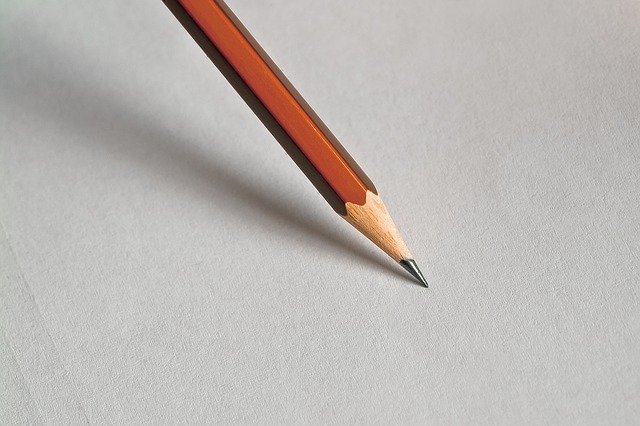
DAILY TOOL
MAR 16, 2022
The Invention And Development Of Pencil
Let’s learn about the invention and development of pencil, a simple daily tool we use but important in human civilization.
Pencils were first invented in Bavaria, Europe, in the early fifteenth century, although the Aztecs had actually used them several hundred years earlier. Pencil in Greek is called “graphein”, which means to write.
At first pencils were made of stone not of wood like we are using now. The stone is sharpened until it is sharp. Actually the stone was used by early humans to kill and skin animals. Then, about 24,000 years BC, they used it to write.
Early pencils were made of pure graphite or carbon from nature. The development of the pencil began with the discovery of graphite in 1564 in Borrowdale, England.
However, pure graphite is very brittle and breaks easily. With the development of the times, graphite is mixed with clay as a binder so that the pencil does not break easily.
The first person to discover it was the French engineer, Nicolas Jacques Conte in 1795, a French man who was also an engineer. Conte made pencils using a mixture of graphite and clay.
A pencil with a more gray color will have a higher hardness level because it has more clay content. Conte got the idea to make pencils with graphite powder so that it would save graphite supplies and still be able to produce pencils.
Graphite was found to be a material that can leave a fairly dense black mark but has proven to be soft and easy to fracture. For that, graphite requires a holding rod. For this purpose wood was chosen as the perfect material.
The wood for making pencils usually has straight fibers so that it is easy to cut and a smooth surface so that it is not easily bent. Some types of wood that are commonly used are Pinus and Pulai.
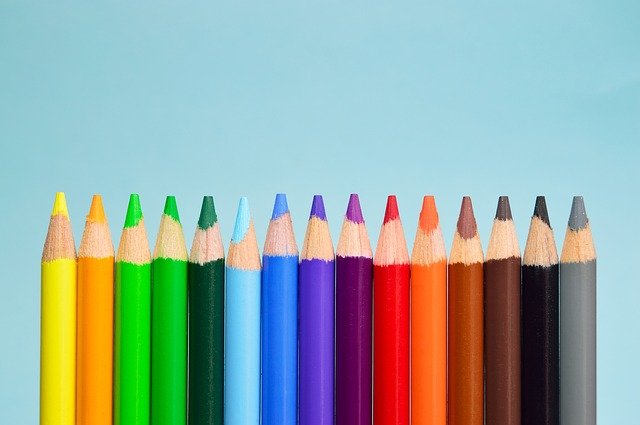
In 1834, Johann Sebastian Staedtler, owner of the Staedtler company, invented oil pastel colored pencils. Then colored pencils began to be produced for artistic needs in the early 20th century. Colored pencils for art were created in 1924 by Faber-Castell and Caran d’Ache.
Today, pencils are divided into two types, namely pencils marked with “H” and “B”. A pencil with an “H” mark is hard and suitable for making thin lines, while a pencil with an “B” mark is soft and is suitable for making thick lines. Pencil is the main tool used in drawing.
Pencils marked 2B and 3B have a softer and softer hold than pencils H and B. These pencils are usually used to emphasize sketches and as basic shading of a realism drawing.
Colored pencils are an art medium created from tiny pigmented cores encased in a wooden cylindrical shell like pencils. However, in contrast to graphite and charcoal pencils, colored pencil cores are wax or oil based and contain varying proportions of pigments, additives, and binders.
The advantage of colored pencils are: having the main material for making wood or the color is easily erased and it has solid and soft properties so it is suitable for viewing beam and gradation images (Color Burst Effect).
By using colored pencils for drawing, the picture will be better and not out of line. the drawback is that if you draw using colored pencils, the coloring will be very long and if you want to be given a color gradation it will be difficult to make it.
Pencils began to be mass-produced in 1662 in Nuremberg, Germany. Furthermore, starting in the 19th century, Faber Castell, Lyra, Staedtler and other companies developed pencils for writing instruments rapidly. In modern times, pencils are made by crushing pure graphite with clay to form a powder.
related post