ASTRONOMY
AUGUST 31, 2021
The Popular Comet Halley
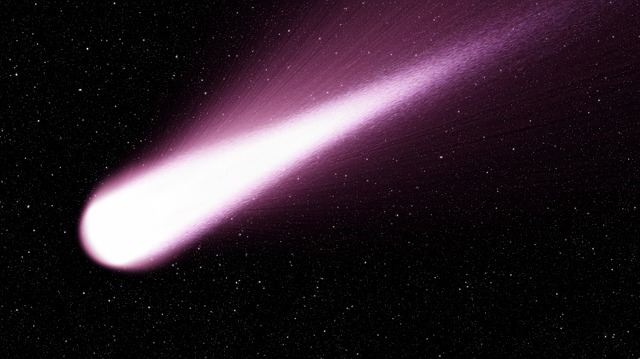
The popular Comet Halley is the most famous comet of all time. Halley’s Comet is a “periodic” comet visible from Earth every 75 or 76 years. It is the most popular comet that visible to the naked eye that regularly visit Earth and can appear twice in a human life. It is projected to return in mid 2061 after the last appearance in 1986.
The comet has been observed and recorded by astronomers around the world since at least 2.000 years to 240 BC. The first known observation was from Chinese astronomers that recorded its passage in the Shih Chi and Wen Hsien Thung Khao chronicles according to European Space Agency. The ancient astronomers called it a “broom star” appeared in the eastern sky in May that year.
Another study even suggests that the comet had been observed way back to 466 BC by the Ancient Greeks. The Space.com website adds in their article that in 164 BC and 87 BC the comet was probably noted in Babylonian records. Even Italian artist Giotto, inspired by the comet in his painting “The Adoration of Magi” and said to have depicted the Halley’s comet as the star of Bethlehem.
But probably Halley’s most famous appearance was before the invasion of England in April 1066 by William the Conqueror, a Norman monk that made him believed that the comet heralded his success. At the time comets were often considered as a sign of great disaster, the death of kings or change in the world by general public opinion. In September 1066 William defeated and killed the English King Harold Godwinson II at the Battle of Hastings. It was later included in a section of the famed Bayeux Tapestry.
But it was not until 1705 that the English astronomer Edmond Halley discovered that these appearances were from a same comet, swinging round the Sun on a vast orbit. The comet appeared in 1531, 1607 and 1682 and Halley calculated that it could return to earth again.
History.com website writes, in his publication “Synopsis Astronomia Cometicae” Halley describes that by using Isaac Newton’s gravitational theories to chart the paths of two dozens comets he was able to do the math of the comet and predicted the comet would reappear sometime in late 1758 or early 1759.
Unfortunately Halley died in 1742 and did not live long enough to witness the return of the comet but his great discovery made the comet to be named after him, “Halley’s Comet” or “Comet Halley.” Eventually the comet appeared on Christmas night of 1758. The French astronomer Nicolas-Louis de Lacaille named the comet to honor Halley.
The first picture captured on camera of Comet Halley was from 1910 when the comet flew by about 22.4 million kilometers from Earth.
In 1986, several spacecrafts from Earth successfully observed the comet from close range. This fleet of comet is nicknamed “The Halley Armada” : Vega 1 and 2 from joint Soviet/French probes, European Space Agency launched the Giotto and two probes from Japan, Sakigake and Suisei, gathered information on Halley from near nearby flight. While NASA spacecraft, the International Cometary Explorer captured pictures of Halley from 28 million kilometers away.
The Giotto probe even flew very close to the comet and sent back high quality images, revealing the core is a solid mass mainly composed of dark dust and ‘dirty ice’ including ice, frozen carbon oxides, ammonia as was predicted before.
The Halley’s Comet comet is formally known as 1P/Halley and has been visiting our solar system for as many as 200.ooo years. The next visit to our inner solar system by the comet will be in July 2061.
related post