ULTIMATE ENGINEERING
APR 6, 2022
All About The Panama Canal
This article covers all about the Panama Canal, the canal that connects two giant oceans in the world : Pacific and Atlantic.
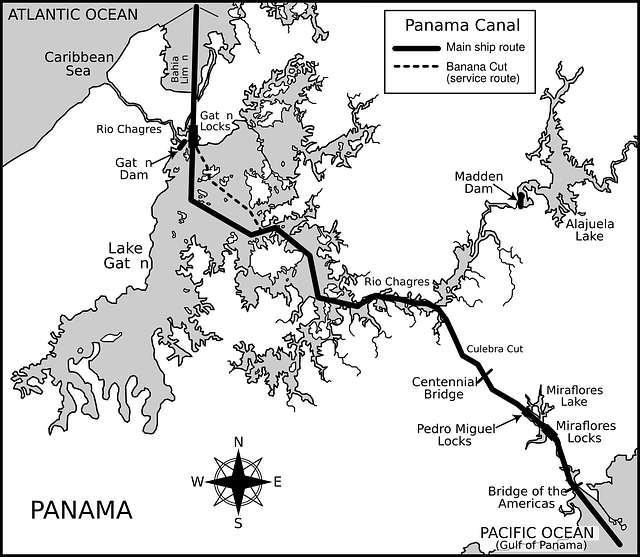
One of the most famous canals in the world besides the Suez Canal in Egypt is the Panama Canal. This is a waterway that crosses the middle of mainland Panama which is located in Central America.
Panama, officially the Republic of Panama is a country located in southeastern Central America, bordered on the north by the Caribbean Sea, on the south by the Pacific Ocean, on the east by Colombia and on the west by Costa Rica.
The Panama Canal is a canal that cuts North America with Latin America and is flanked by the Atlantic and Pacific Oceans. The Panama Canal itself was made with the aim that ships could cross the two continents without having to turn south first. The Panama Canal is a freshwater canal that ‘forces’ the two sides of the sea, namely the Pacific Ocean and the Atlantic Ocean, to be connected.
The definition of a canal or canal that is functioned is a waterway that is specifically built along the main seawater route to allow the passage of ships.
In fact, there are other canals in the world, including the Kiel Canal (Germany), the Volga Canal (Russia), the Baltic Canal (Russia), the Houston Canal (USA), and the Welland Canal (Canada) but the Suez Canal and the Panama Canal are the most famous.
While the Suez Canal is a canal that is made directly connecting the two sides of the sea, the Panama Canal requires a dam for a ship to pass through.
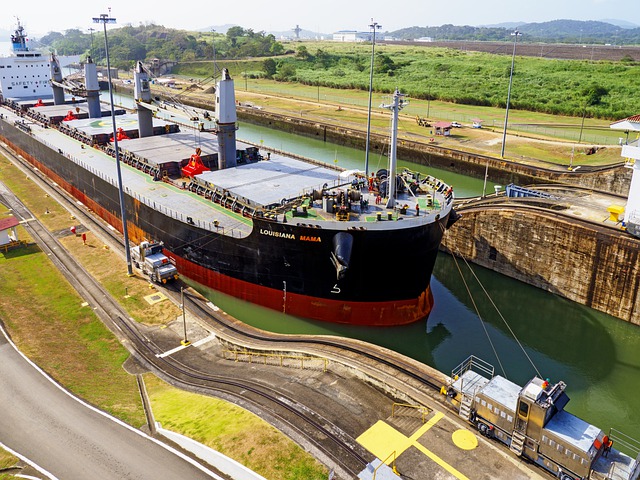
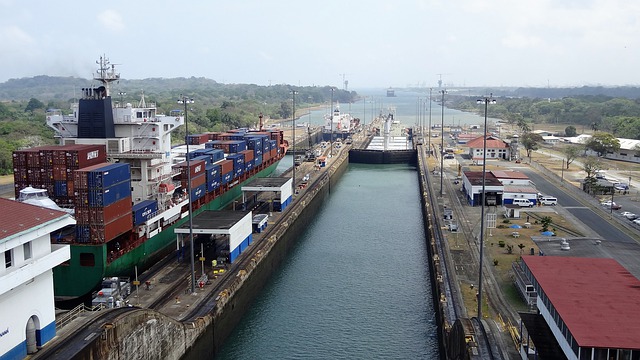
The way this canal works is by using a dam along with tugboats and locomotives whose rails are on the side of the water canal. Ships that will pass must pass through several narrow gates. Then, at each gate water will be poured with a very large volume in order to lift ships that pass.
The canal cuts through the isthmus of Panama along 82 km. Plans for the construction of this canal had begun to emerge in the 1500s. The intention to build a canal was first conceived by King Charles V of Spain in 1524 to facilitate the passage of ships, especially those carrying gold. Although there were survey results and plans in 1529, the political and technological situation in Europe at that time was still not possible.
After more than three centuries, France took the initiative to build it through Panama. Ferdinand de Lesseps, a French diplomat, was trusted to lead the project. Armed with the success of building the Suez Canal in Egypt, de Lesseps was confident that he could complete the canal. Initially, the French government started building the canal on January 1,1880
However, work stopped in 1894 because 25,000 workers on this project died and the company led by Ferdinand de Lesseps went bankrupt.
In 1904, the United States Government took over the project and was completed in 1914. The construction cost was recorded at US $ 639 million and became the most expensive project at that time.
Since its opening in 1914, the Panama Canal has served as the basis of Panama’s economy. However, the US government had clashes with the local Panamanian government because of territorial disputes.
The problem was finally resolved in 1977 and ended the conflict between the US and Panama. The canal and the area around it were controlled by the United States until December 31, 1999 after U.S. President Jimmy Carter signed the Torrijos-Carter Treaty on September 7, 1977. The two nations joined forces to share the tasks of managing the Panama Canal.
In 2007, the Panama Canal began to be expanded because it is no longer suitable for the giant tankers or the largest US aircraft carriers today.
The Panama Canal eventually became a vital trade route with varying costs. The highest fee to cross the Panama Canal was paid by one of the princes at a cost of US $ 141,344. While the lowest fee of US $ 36 cents paid by Richard Halliburton to swim in 1928.
related post