COUNTRY HISTORY
NOVEMBER 10, 2022
The Rise And Fall Of Mongolia History
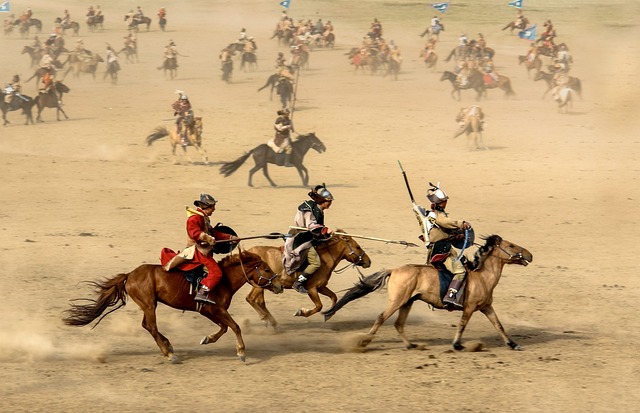
The Mongolian Empire was the second largest empire in history after the British Empire and controlled most of Asia to central Europe.
Mongolia is a unitary state with a semi-presidential system in the form of a constitutional republic. The country is bordered by Russia to the north and China to the south.
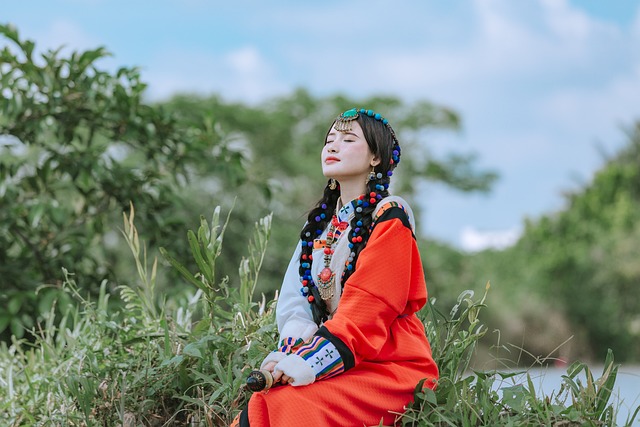
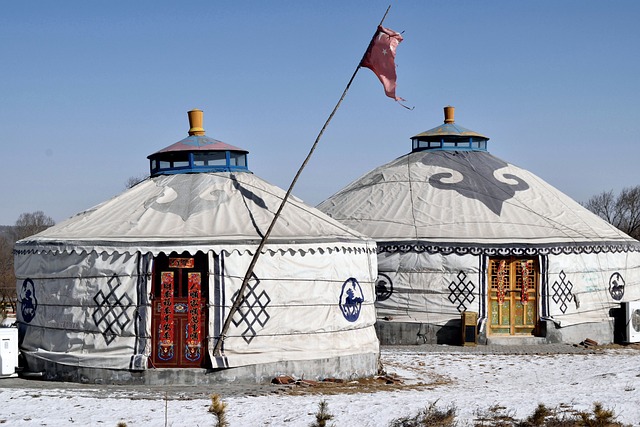
With an area comparable to that of Alaska, most of Mongolia is arid, mostly grassland with mountains to the west and north and the Gobi Desert to the south. The majority of the population are ethnic Mongolians who adhere to Tibetan Buddhism with a nomadic life.
THE EMPIRE
Mongolia was the seat of the Mongol Empire in the 13th century but was ruled by the Qing dynasty from the late 17th century until an independent government was formed with the help of the Soviet Union in 1921.
The Mongolian Empire was the second largest empire in world history after the British Empire, controlling some 33 million km² at its peak, with an estimated population of over 100 million people and being the most powerful among all the empires of the Middle Ages.
The Mongolian Empire was founded by Genghis Khan in 1206 after uniting the Mongolian tribes which at that time were often at odds among themselves.
At the start of his reign, the Mongol Empire covered only the prairies and highlands of northern China. After ruling many nations within its territory, the domain of the Mongol Empire expanded to include most of East Asia.
At its peak, the Mongolian Empire controlled most of Asia from Southeast Asia to central Europe. During its existence, Mongolia carried out cultural exchanges between East, West and the Middle East around the 13th and 14th centuries.
The Mongolian Empire was ruled by the Khagan (the Great Khan descended from Genghis Khan) for generations. After the death of Genghis Khan, the Mongolian Empire was basically divided into four parts namely; Yuan Dynasty (China), Ilkhanate (Persia), Chagatai Khanate (Central Asia), and the Golden Horde (Russia).
The Mongolian Empire also had plans to attack Western European countries, such as France, Rome and other European countries. Historians claim that had it not been for Ogadai Khan’s death, then it is likely that all of Europe would have been conquered and European history would have changed.
GEOGRAPHIC
With an area of 1,564,116 km (603,909 sq mi), Mongolia is the 19th largest country in the world (after Iran and before Peru).
The geography of the country is the Gobi Desert in the south and the cold mountainous region in the north. Much of Mongolia also consists of steppes. The highest point in Mongolia is the Khüiten Hill in Tavan bogd at 4,374 m (14,350 ft).
Mongolia is known as the “Land of the Eternal Blue Sky” or “Country of the Blue Sky” for having more than 250 sunny days a year.Most of the country is hot in summer and very cold in winter, with January averages dropping to −30 °C (−22 °F).
The name “Gobi” is a Mongolian term for desert steppe, which usually refers to the category of arid grasslands with insufficient vegetation to support marmots but sufficient to support camels. The Mongols distinguished the Gobi from the desert, though this distinction is not always obvious to outsiders unfamiliar with the Mongolian landscape.
MODERN DAY
Mongolia’s foreign relations have traditionally focused on its two large neighbors, Russia and the People’s Republic of China. Mongolia is economically dependent on these countries: China receives 90% of Mongolia’s exports by value and accounts for 60% of its foreign trade, while Russia supplies 90% of Mongolia’s energy needs.
The Mongols are quite homogeneous, Ethnic Mongols make up about 95% of the population and consist of Khalkha and other groups, all of whom are distinguished primarily by dialects of the Mongolian language. Khalkhas make up 86% of the ethnic Mongolian population. The remaining 14% includes the Oirats, Buryats and others.
Economic activity in Mongolia has long been based on grazing and agriculture, although the development of extensive deposits of copper, coal, molybdenum, tin, tungsten and gold minerals has emerged as a driver of industrial production.
After the communists took control of mainland China, China finally recognized Mongolia’s independence. After the collapse of the Soviet Union, Mongolia embraced democracy.
related post